Blog

  • 6 Suggestions to Harness the Energy of Spring, to Spring Forward in your Life.

    6 Suggestions to Harness the Energy of Spring, to Spring Forward in your Life.

    spring forward
    Photo by Rod Long on Unsplash

    In astrology, the Spring Equinox is the actual ‘new year,’ which makes complete sense to me.

    I, for one, always feel much more inclined to shake things up in my life in springtime than in the darkest depths of winter when we’re traditionally encouraged to consider developing new habits.

    In January, I reflect. In February, I start to get an itch. And in late March, I begin to scratch.

    As the signs of new life happening outside my window become more apparent, I get an urge to move into action. Don’t you?

    If you’re starting to feel a spring in your step and want to harness that energy to create some changes in your life, the following are my suggestions.


    Start spring cleaning your home.

    There is a reason why there’s a tradition of spring cleaning. It harks back to pre-electricity days when we were all more naturally attuned to our bio-rhythms. And they, in turn, are influenced by nature.

    As daylight increases, our energy levels start to rise too. The lethargy of winter begins to be replaced by enthusiasm and optimism – and these are far better moods to support us in creating change.

    And deep cleaning (and decluttering) has a far-reaching effect on the psyche for many of us. It can help us to release mental and emotional baggage that has been holding us back. And our newly refreshed homes can infuse us with a newfound inclination to tackle tasks we’ve been putting off.

    Even with the benefit of electricity, I can happily mooch through the winter, oblivious of cobwebs forming in dimly-lit corners. But as we move into late March and early April, I can see those cobwebs clearly, and I want them gone.

    I’ve been eyeing them up the last couple of weeks on the brighter days, and yesterday, on the equinox, I finally went through the house with a long-handled duster. My spring cleaning is now in session.

    It will take me several weeks, as I don’t love cleaning. But I do love the effect of a thoroughly cleaned (and decluttered) space. The energy in each room will palpably shift as I complete it. And as I cross each room off my list, I’ll build momentum to work on other projects too.


    Clean your Windows.

    Yes, this might fall under the spring cleaning category. But it deserves to be mentioned in its own right.

    Our windows let the light (chi, energy, life force) into our homes – and our lives. The quality of light affects our moods (and how well we can see the cobwebs gathering in the corners of our homes). Whenever I clean my windows, it gives me an immediate boost. And I continue to enjoy that feeling every time I look out for weeks…until they start to get grimy again.

    Unlike the spring cleaning, the windows will be a regular maintenance job from now until the end of September – giving me a repeated pick-me-up long after the upshift in energy from the spring cleaning has dulled.

    And again, that mental boost will aid me in following through on my life plans.


    Spruce up your entryway – both inside and out.

    Ok, this is the last one that can fall under the spring cleaning umbrella. Again, it does deserve to be highlighted in its own right.

    Our entryway sets the tone for how we feel when we come home. When you come through the door, are you greeted by a cheery and inviting space or one which drains your energy?

    In Feng Shui, the main entryway is the portal of chi, bringing opportunities into our lives. It is essential energy can enter freely and flow easily into and throughout our homes.

    If yours feels a little lackluster after the winter, now is a great time to spruce it up. Clean, organise, swap out seasonal items. Maybe redecorate, or add a plant or piece of artwork that gives you a little lift when you arrive home.

    And do the same outside. Sweep the step, remove the cobwebs around the doorframe and tidy up your plants. Let that little lift begin as you approach your home and continue after you walk through the door.


    Sow some seeds and tend to your plants.

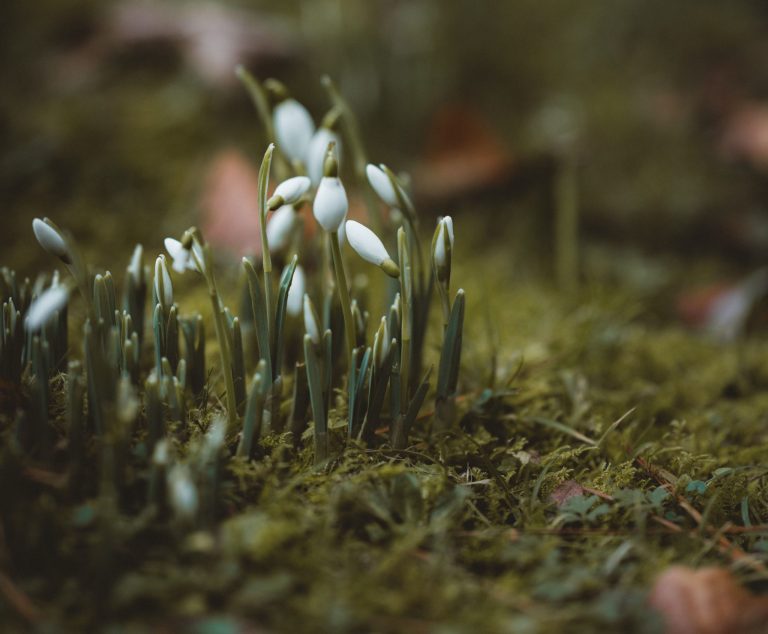
    March and April are the primary months for sowing seeds, especially if it’s for edible plants. Whether or not you’re not planning on growing your own food, do think about pretty foliage and flowers that will give your heart a lift throughout the summer and early autumn months.

    And pot up any plants that are outgrowing their current containers. As you do so, imagine that you’re sowing your intentions for what you want to create in your life. Or envisage plans in progress growing in the direction you desire.

    Use this time of birth and renewal in nature as a metaphor for your own life, and bring conscious intention to these everyday jobs.


    Rearrange your furniture.

    This is a quick and cost-free way to refresh a room, and it can help to shift your energy at the same time.

    Maybe something isn’t working well for you right now. Circulation might be tricky because furniture is placed too close together. Or a seating arrangement isn’t facilitating conversation or connection. Maybe you’ve introduced a desk into a room, and now everything is feeling cramped.

    If a room in your home is feeling off, then reconsider the layout of all the items in it. This has a significant impact on the functionality of a space, which in turn impacts our moods when we’re in it.

    And the change of season can also change the way we use different rooms. Sometimes a room falls out of use entirely at certain times of the year. Again, switching up the layout can often help to make a space feel more relevant. And it’s always a shame to have some rooms sitting idle while others may be working over-time.

    Get imaginative and see how you can rejig things so that all your rooms feel fresher, more inviting, and useable.


    Create a Vision Board.

    Many people do this in January in support of their new year resolutions and goals. For me, this is counter-intuitive. I prefer to spend January contemplating how I’d like my year to pan out and then get into supportive practices as we move into spring.

    And the visual representation of what we’d like to create can be one of these practices. Vision boards help to programme our subconscious mind. They give clarity around what we want and can help to support us to keep going. To persist when the going gets tough so we can bring our visions into reality.

    If this idea appeals, jot down some notes on how you’d like to see your life unfolding over the remainder of this year. What kinds of experiences do you want to have, what type of work do you want to be doing, what kind of lifestyle do you want to be pursuing? Think about your health, relationships, hobbies. Focus on the essence of what you want, rather than getting too specific about the details.

    Then find images that speak to you of these ideals and create a collage of them. It can include words and even abstract images. It’s not to make an impression on anyone else. The only thing that matters is that when your eyes alight on it, what you see makes sense to you. And makes an impression on your subconscious.


    While we can decide to implement changes in our lives at any time, I believe that harnessing the energy of birth and growth associated with spring can help us pursue our life mission.

    Our bodies and minds respond to the increasing light, giving us much-needed fuel to kick-start new projects. It’s the best time of year to focus on new beginnings.


    You might also be interested in:

    Spring Cleaning is Emotional Clearing

    Imbolc: What are you Ready to Give Birth to?

    Pro Tips to Elevate your Home Decor: Room Layout

  • How to Heal your Relationship Rifts with Loving-Kindness Meditation

    How to Heal your Relationship Rifts with Loving-Kindness Meditation

    Or at least bring you some peace.


    loving kindness
    Photo by Kristina Litvjak on Unsplash

    Resolving conflict is part and parcel of human relationships. And often, it requires us to shift our energy a little. 

    “We cannot solve our problems with the same thinking we used when we created them.” ~ Albert Einstein

    Regardless of who was right and who wrong — a matter of opinion in most cases — to resolve a conflict, we need to be able to step into the other’s shoes.

    But this can be so hard to do when we’re feeling angry, frustrated, or genuinely hard-done-by. First, we need to calm down and tune into our empathy muscles.

    When I’m in this situation, I turn to the Buddhist practice of Metta Bhavana, also known as Loving Kindness meditation.

    ‘Metta’ means love, friendliness, or kindness. ‘Bhavana’ means development or cultivation. 

    The practice works to help us feel more loving towards ourselves by sending a blessing. It is completely accessible to people new to meditation.


    Throughout the process, we bring different people to mind and send them a blessing. 

    We can do this in one of two ways, or we can combine both:

    1. Bring to mind all that you admire and appreciate about this person. Fill your heart center with a feeling of love for them, and then radiate that love out to them.
    2. Holding them in your mind’s eye, silently recite the following (or your own version of it):

    May you be well.
    May you be happy.
    May you be peaceful.
    May you be filled with loving-kindness.

    There is a recommended sequence in which to call people to mind:

    1. Start with yourself. It is always best to fill yourself up with your own love before sending it out to others. Some people have difficulty with this, though. If you find that the case, then swap around the first and second stages.
    2. A person you know well and care for.
    3. A neutral person with whom you are acquainted but do not know well.
    4. A person with whom you are experiencing some conflict.
    5. All beings, everywhere.

    This is a beautiful meditation to practice regularly, without needing to be experiencing conflict with anyone.

    But when you are in conflict, I do recommend it to help heal rifts. For me, I find that it diffuses my own feelings. Often the other person detects the softness in our consciousness on the psychic level, and they soften in return. This helps us to come together with a kinder attitude towards one another, and from there, to resolve the matter.

    But not every conflict needs to be resolved with a coming-back-together. We don’t have to condone or tolerate bad behavior or weaken our boundaries. And sometimes, a permanent separation is what is needed for our highest good.

    Even so, we need to find some peace within us. 

    And here again, sending loving-kindness to the other can help us. We can keep our distance from others while acknowledging their humanity. Everyone has their issues and makes mistakes. But sometimes, we need to draw a line and move on.

    It’s just easier to do that when we release the inner turmoil. Of course, that takes time and is unlikely to happen in a single meditation. Regular practice can help dissolve feelings of bitterness over time until we reach a place where we genuinely wish the other person well without needing or wanting them back in our lives.


    Students often query what to do in stage four if they aren’t experiencing any conflicts at that time. 

    What I suggest — and do myself — is to bring to mind someone that you may be having critical thoughts toward right now, even if you’re not expressing them verbally to the other person. 

    On an energetic level, there is a conflict taking place. And we can feel when someone is off with us without verbalizing it.

    With this meditation, we can soften our energy concerning the other person. Often that can bring insights that shift how we feel about them. And a potential conflict can be avoided by healing on the metaphysical level.

    If no such situation is arising for you right now, then maybe look to your past. Is there a conflict there that hasn’t been healed? Again, we can do that in our hearts and minds without needing to bring the other person back into our lives.

    We do this for ourselves, for our own healing.

    That’s the beauty of Loving-Kindness meditation. While we’re sending peaceful energy toward others, we’re also instilling it in ourselves. And we all need and deserve this.

    May we be well.
    May we be happy.
    May we be peaceful.
    May we be filled with loving-kindness.

  • A Feng Shui Primer for Westerners.

    A Feng Shui Primer for Westerners.

    feng shui primer
    Image: Wikimedia Commons

    Many ancient traditions applied sacred space practices to purify the energy of our homes. In the modern western world, though, Feng Shui is possibly the better-known system.

    And it can be relatively simple to apply — if we don’t get too bogged down in having to do it perfectly.

    Before getting started, you need to choose whether to follow classical or western Feng Shui. Having experimented with both, I have found my groove with the western version (also known as Black Hat). I like this system because it allows greater flexibility and creativity in applying “cures.”

    If I had grown up in a culture immersed in Classical Feng Shui’s teachings, they would be woven into my subconscious psyche. But without that context, they don’t have the same meaning for me, and the western version resonates with me more.

    But each to their own, I will outline below how to apply the Bagua tool with both methods.


    First, a word on manifestation.

    Many people approach Feng Shui as a manifestation technique. And while it can certainly be helpful in this regard, I think it’s unhelpful in general to adopt it only for that purpose. 

    I use it to help me stay focused on allowing the energy in my home to flow freely — which requires me to keep the space free of clutter.

    And I also use it to help me get clear on where I might be getting stuck in life and explore ways of becoming unstuck.

    Some Feng Shui consultants will tell you to put “cures” in place, and then your life will magically improve. Please don’t have these kinds of expectations, as disappointment is likely to follow.

    However, when we combine symbolic cures with reflecting on and adapting our own thought, beliefs, and behavior patterns, Feng Shui can support us in manifesting positive changes in our lives.


    The Bagua.

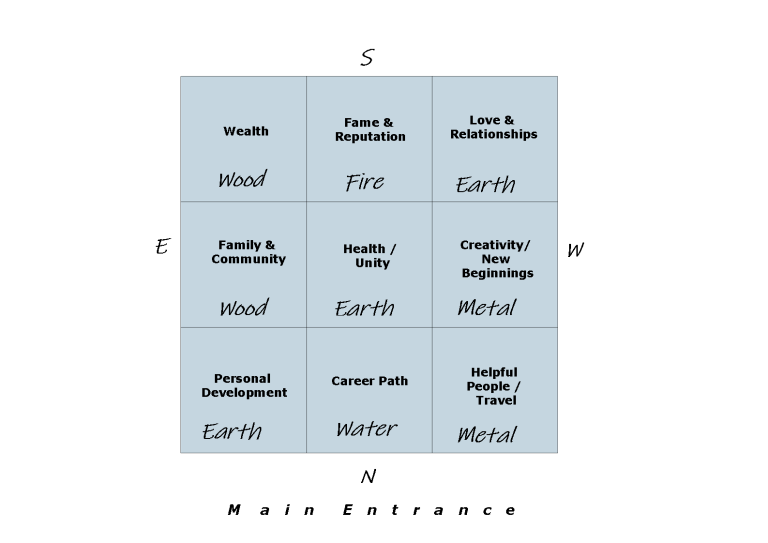
    The Bagua is the fundamental tool to become acquainted with. It divides your home into nine equal areas (guas), each of which corresponds with a different area of your life:

    · Health/Unity
    · Wealth & Blessings
    · Career/Life Path
    · Family & Community
    · Knowledge & Wisdom
    · Relationships
    · Creativity/New Beginnings
    · Fame & Reputation
    · Helpful People & Travel

    When you view your home in this way and associate particular areas with different aspects of your life, decluttering, cleaning, and re-organizing a specific gua can often result in improvements in the corresponding region of your home.

    As already mentioned, for the outer changes you make in your guas to have a mirroring effect in our lives, we also need to reflect on what belief or behavior patterns we have that may be contributing to a less than optimum situation.

    It is essential to couple the outer work with inner work.

    So, when we are decluttering an area — for example, the wealth area — we could ask ourselves the question before we start, “What do I need to see or understand about my financial circumstances, or about my approach to finances, that will help me to generate improvements?” 

    Just ask the question, or set an intention to receive any wisdom or insight needed about this aspect of your life — and let it go and set about decluttering, re-organizing, and applying whatever remedies might be required. 

    Trust that whatever insights you need will arrive — and be open to listening to any inner wisdom that surfaces. Don’t dismiss what comes up, even if your immediate response is one of resistance. 

    Allow it time to percolate. You don’t have to go with every idea that pops up, but do make a note of them.

    Also, be patient with this process. Expecting that a solution will arise during the decluttering or immediately afterward can slow it down or even block it. 

    Maybe there is nothing for you to do right now. Perhaps the solutions will come later. Just be willing to see whatever you do need to see and allow all ideas and suggestions to unfold with ease at the right time. 

    And in the meanwhile, enjoy the benefits of having a clear, nurturing, and organized space in your home.


    Applying the Bagua to your Home.

    Classical schools use the compass, and western schools use the front door. 

    One of my teachers recommended using the compass if you live in a detached house situated in a vast, open space. And to use the front door if you’re living in attached buildings or buildings that are close together.

    When it comes to the front door system, some teachers are quite insistent that it needs to be the architecturally assigned front door. Others are more flexible and allow the back door to be the appointed “front door” for the Bagua purpose if that’s the door you use as your main entrance to your home. 

    And one of my teachers even said we could choose!

    So, what’s the right system for you? Whatever resonates best with you — start with that. I have experimented with all three in my current home, and now I have settled into using the back-door-as-main-entry method.

    Wherever it sits on your Bagua, your front door is considered as the primary energy portal for your home, with opportunities coming in through this entrance. 

    So, the space inside our main entry must be reasonably clear and uncluttered, allowing the energy to flow in freely and begin to circulate throughout our homes.

    Whether you choose to use the compass method or the front door method, to apply the Bagua, you’ll need to draw your home’s floor plan. Be reasonably accurate in terms of proportions. You can step it out if you don’t have a measuring tape handy.

    Then divide it into a grid to identify what part of your home represents what parts of your life. Do this for each level of your home, if it is multi-story.

    feng shui primer

    No matter what method you use, your home’s Health/Unity area is always in the center.

    If you’re using the front door method, then your front door will be opening into either your helpful people/travel, career/life path, or self-development area. And those guas will be directly above and below one another on different floors. 

    If you’re applying the compass method, then regardless of where your front door is situated, your guas will be in the following places:

    ·Wealth & Blessings: South East
    · Fame & Reputation: South
    · Relationships: South West
    · Family & Community: East
    · Creativity/Children/New Beginnings: West
    · Self-Development/Knowledge & Wisdom: North East
    · Career & Life Path: North
    · Helpful Friends/Travel: North West

    It’s worth noting that your kitchen and bedroom are also hotspots for wealth and relationships, respectively.

    So, no matter where your relationship gua sits officially, your bedroom is also a space tied to romantic relationships. And your kitchen is also closely associated with finances.


    The main issues tend to be related to the flow of energy and the symbolism placed throughout the home.

    Piles of clutter can block the circulation of energy or furniture poorly placed. And the remedy is to remove whatever obstacles are in the way — either decluttering or rearranging the furniture.

    The result you want to achieve is a clear pathway for people — and the energy — to easily move around your home.

    It is just as important to check that energy (representing opportunities) is not escaping from your home too quickly.

    While a clear path for the easy movement of chi is needed, it’s not recommended to have a straight path between the front door and the back door or a window. That moves the energy in and out of the house too quickly, without redirecting it around the home first.

    Of course, this can be an architectural issue that we can’t control. But the beauty of Feng Shui is that there is a remedy for every problem. These cures can be overly complicated in classical Feng Shui, which is another reason I prefer western guidelines.

    Side note: if you prefer to follow the classical system, it’s best to consult a qualified practitioner who will do a detailed assessment of your home.

    If there is a straight path between your main entry and an external door or window, the remedy is to slow down the movement of chi. You can do this by hanging a crystal just inside the entry and exit points. And placing an obstacle in the way (helpful in this instance), for example, a table with a plant on it.

    If you do have an architectural issue like this that you’re finding difficult to resolve, it would be a good idea to consult a practitioner — either western or classical.

    Energy can also escape prematurely down toilets and other drains. So the recommendation is to keep toilet lids down and keep bathroom doors closed. 

    You also need to check that water isn’t excessively draining out of the house. If you find any leaking taps or pipes, fix them without delay.


    Once you’ve sorted out energy blocks or drains, you want to examine the symbolism of the art and décor in each gua. 

    Ask yourself if it reflects how you want that aspect of your life to be.

    For example, does the symbolism in your relationship gua depict happy, loving relationships. Are there images of single people there? Are there images of unhappy people there (or anywhere in your home)?

    Is there anything in your wealth area that conveys a sense of prosperity to you? Conversely, is there anything there that makes you feel inadequate when you see it?

    Reflect on how the external appearance of each area of your home supports what you want to be feeling about that aspect of your life on the inner level. And swap out anything that doesn’t symbolically help that with something that will.


    Both classical and western schools also use the elements of nature as remedies.

    Each gua is connected with a different element of nature:

    · Health & Wellbeing/Unity: Earth
    · Fame & Reputation: Fire
    · Relationships: Earth
    · Family & Community: Wood
    · Creativity/Children/New Beginnings: Metal
    · Self-Development/Knowledge & Wisdom: Earth
    · Career & Life Path: Water
    · Helpful Friends/Travel: Metal
    · Wealth: Wood

    To help activate each gua, it’s recommended that the associated element is the dominant one in that area. 

    For example, in Fame & Reputation, you want fire to be symbolically represented. You can achieve this with a lamp, a candle, electrical items, or red/purple colors.

    Each element has its own color, and using that color through your décor helps to represent the element. Shapes can also help.

    Use the following to symbolically represent the elements:

    · Earth: yellow, orange, brown; crystals, stones, and rocks; ceramics; squat furniture; most plants

    · Fire: red and purple color spectrum; diamond and triangular shapes

    · Wood: green, upward growing plants, e.g., bamboo; tall furniture; artwork depicting forests; standing lamps

    · Water: blue and black color spectrum; inorganic shapes; water features, e.g., fish tanks, water fountains; artwork depicting watery landscapes

    · Metal: white and all metallic colors; metal frames and appliances; oval, circular, and curved shapes

    To ensure that the associated element is dominant in the gua, you will need to consider how any of the other elements are also present because they each have both a constructive and destructive effect on some of the others. 


    How the elements affect each other.

    Each element has a nourishing effect on one of the other elements, a controlling effect on another, and a destructive effect on one more. 

    While this may appear to be positive on the one hand and negative on another, it is neither.

    In the natural world, everything has a purpose. Understanding how the elements affect each other helps us rebalance and harmonize their placement in our home.

    Fire destroys wood but feeds earth. It also controls metal. So be careful about having fire elements in areas that are activated by wood or metal. 

    You definitely want to have fire element in Fame and Reputation. And it is also helpful in Health and Wellbeing, Relationships and Knowledge and Wisdom, as they are all earth guas — and earth is fed by fire. 

    Always be careful not to have too much fire — contain it just as you would an actual fire in your home.

    Earth weakens fire and controls water. It feeds metal. So, while it can be helpful to have some fire elements in the earth guas, it is less helpful to have earth elements in Fame and Reputation

    But having some earth element in Helpful People/Travel and Creativity/New Beginnings will support the metal element in activating this gua.

    Water feeds wood, destroys metal, and controls fire. So it follows that it’s helpful to have water symbolically represented in Family & Community and Wealth. And it is not so helpful to have it in Fame & Reputation, Creativity/New Beginnings, or Helpful People/Travel.

    Wood feeds fire, weakens water, and controls earth. Therefore it’s not so helpful in Health & Wellbeing, Self-Development, Relationships or Career/Life Path. Conversely, it is helpful to have in Fame & Reputation.

    Metal controls wood, weakens earth, and feeds water. In addition to having metal as the dominant element in Creativity/New Beginnings and Helpful People/Travel, it’s also helpful to have metal in Career/Life Path. Conversely, it’s not helpful to have too much metal in Health & Wellbeing, Relationships, Wealth, or Family & Community.

    Now, if your kitchen happens to sit in one of these wood or earth-related areas, it’s likely to have many metal appliances in it. No need to panic — all can be balanced out with the symbolic representation of other elements.

    Side note: again, in classical Feng Shui, the elements’ application can be complex, requiring precise amounts of an element to be placed in a particular part of your home. You’ll need the help of a professional in determining this.


    Feng Shui is about balancing and harmonizing the energy of our homes. 

    There’s no need to become obsessive or take a perfectionist approach. 

    The key lies in becoming aware of how well the chi can circulate and how the overall energy supports us in creating the life we want. 

    We do the best we can, and we do it with deliberate intention. Small tweaks applied mindfully can be more helpful than you think.

    Because making these tweaks on the external often prompts internal inquiry around these areas of our lives. And ultimately, that inner reflection can lead to the most helpful changes. 

    For more on that, you might enjoy:

    Feng Shui: Why it Often doesn’t Work, and How to Fix that.

  • Genuine Kindness is a Self Care Practice.

    Genuine Kindness is a Self Care Practice.

    Misconstrued kindness, not so much.

    kindness
    Photo by Matt Collamer on Unsplash

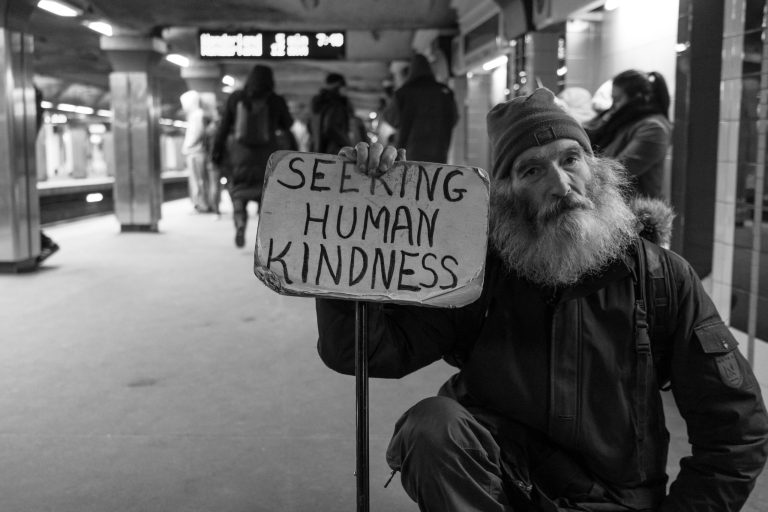
    February 17th is Random Acts of Kindness Day. That’s kind of cool. And also sad.

    We shouldn’t really need such a day. Being kind should be part of our daily experience. Not just for the benefit of others, but for our own benefit too.

    “Kindness in words creates confidence. Kindness in thinking creates profoundness. Kindness in giving creates love.” ~ Lao Tzu

    Spiritual teachers, psychologists, and social scientists tell us that being of service to others, expecting nothing in return, helps us feel happier.

    Studies also tell us that kindness can improve our physical health, leading to a longer life. And it releases happy hormones – serotonin, and oxytocin – causing an improvement in our mental and emotional health too.

    “Beginning today, treat everyone you meet as if they were going to be dead by midnight. Extend to them all the care, kindness and understanding you can muster, and do it with no thought of any reward. Your life will never be the same again.” ~ Og Mandino

    So the jury is in — kindness is a win-win for all concerned. And the most significant advantage to all of this lies in its ease of accomplishing. 

    “Too often we underestimate the power of a touch, a smile, a kind word, a listening ear, an honest compliment, or the smallest act of caring, all of which have the potential to turn a life around.” ~ Leo Buscaglia


    Remember to include yourself in your random acts of kindness practice.

    “You can search throughout the entire universe for someone who is more deserving of your love and affection than you are yourself, and that person is not to be found anywhere. You yourself, as much as anybody in the entire universe deserve your love and affection.” ~ not Buddha

    Kindness is important. The world needs more of it. But let’s be clear about what it is — and what it isn’t.

    Don’t confuse kindness with duty or sacrifice. Being kind to others doesn’t require us to deny our own needs. As the proverb goes, you can’t pour from an empty vessel.

    “Be gentle first with yourself if you wish to be gentle with others.” ~ Lama Yeshe

    Duty is not something we can ignore just because we don’t want to fulfill it. And performing our duties — to our dependents, our employers, our clients — is not kindness.

    Kindness is performed outside of duty, and always as a matter of choice.

    “Be there for others, but never leave yourself behind.” ~ Dodinsky

    Neither is sacrifice the same thing as kindness. Sacrifice is when we ignore our own needs because we’re so busy taking care of others. That isn’t a sustainable option. 

    And often, sacrifice doesn’t feel like we have a choice in the matter. We may feel manipulated or forced into something. 

    Sacrifice depletes us rather than nourishes us.

    Kindness is always optional, and it strengthens us.

    And the place to begin is right where we are — with ourselves. Because, with all positive habits, a strong inner foundation enables us to contribute more and better to the world around us.

    And, as already mentioned, the world needs more kindness.

    “Remember, there’s no such thing as a small act of kindness. Every act creates a ripple with no logical end.” ~ Scott Adams

  • A Valentine’s Meditation Focused on Love, not Romance.

    A Valentine’s Meditation Focused on Love, not Romance.

    valentines meditation
    Photo by Fabrizio Verrecchia on Unsplash

    The Hallmark holiday that is Valentine’s Day may make ‘Love’ appear to be an exclusive club. With membership reserved for those with a romantic partner.

    This is precisely why the day can be one of the loneliest days of the year…

    …for those who are single
    …for those who are in unfulfilling relationships
    …for those who are missing a loved one 

    The very day meant to celebrate the most profound experience possible has been hijacked by the ‘love’ industry. And instead of sparking joy, it can trigger all kinds of upsetting emotions.

    But here’s the thing - if it does cause old wounds to surface, that’s not a bad thing. It’s normal to want to reject or suppress them. But in acknowledging, feeling, and then releasing them, we can weaken their power over us.

    A wonderful meditation to help with this is Metta or Loving-Kindness. This Buddhist practice helps us improve self-love. And it also encourages us to send love to those we care for as well as those we find challenging to love.

    Traditionally, we send metta to different people over five stages. We begin with ourselves, then move on to someone we care about, someone we have a neutral disposition towards, someone who is challenging us, and lastly, to all beings.

    What I love about this meditation, though, is that it’s wonderfully adaptable. A few years ago I created a version especially for Valentine’s Day. The idea is to send Loving Kindness to all the people we have loved through our lives, both romantically and platonically.

    If the idea appeals to you, here’s how it goes.

    Begin with yourself.

    Metta meditation’s foundation is to fill yourself up with love before you send it out to others in the subsequent stages.

    If you can, bring to mind the qualities in yourself that you appreciate. And if this challenging, then silently recite the following mantra to yourself:

    May I be well.
    May I be happy.
    May I be peaceful.
    May I be filled with loving-kindness.

    Bless all of your loved ones.

    Allow your family, friends, current romantic partner to come into your consciousness. Silently thank them for being in your life and use the mantra to send them all loving-kindness:

    May you be well.
    May you be happy.
    May you be peaceful.
    May you be filled with loving-kindness.

    Bless your past lovers.

    Even if things ended badly, bring them to mind and remember why you loved them in the first place. Focus on that, rather than the reasons your relationship fell apart. Of course, this may not be easy. In that case, then go straight to the mantra:

    May you be well.
    May you be happy.
    May you be peaceful.
    May you be filled with loving-kindness.

    The hard one: Bless anyone you’re having difficulties with.

    Maybe this is a romantic partner, but there’s conflict in the relationship. Or it could be an ex who you still feel angry towards. But there doesn’t have to be any romantic association with this person.

    It doesn’t matter what the connection is or was. If you can, remember the qualities in this person that you do (or used to )admire. And if that’s too difficult, then rely on the mantra.

    May you be well.
    May you be happy.
    May you be peaceful.
    May you be filled with loving-kindness.

    Send Loving-Kindness to anyone who finds this day difficult.

    For those who are coming to terms with a recent breakup. 

    For those who are grieving the passing of their life partner.

    For those who are experiencing unrequited love. 

    For those who do not know how to love themselves.

    For all who have difficult emotions triggered by this particular holiday.

    May you be well.
    May you be happy.
    May you be peaceful.
    May you be filled with loving-kindness.

    Let’s reframe and reclaim Valentine’s Day as a celebration of all kinds of love, rather than romance.

  • Harness the Power of the New Moon with Meditation.

    Harness the Power of the New Moon with Meditation.

    new moon meditation
    Photo by Çağlar OSKAY on Unsplash

    I have developed an interest in astrology in recent years, but I don’t pretend to fully understand its intricate complexities.

    I have learned, though, to pay attention to the over-arching themes. And I do my best to be mindful of them as I go about my days.

    Generally, we’re told that the energy around the new moon is ideal for setting intentions. And the full moon energy supports us in letting go of what isn’t serving us.

    This week’s new moon in Aquarius — on Thursday 11th or Friday 12th, depending on your time zone — is being heralded as the most powerful new moon of this year.

    It has something to do with anoverload of planets in Aquarius.

    Six of the seven traditional planets/stars are in Aquarius — Sun, Moon, Mercury, Venus, Jupiter & Saturn. ~ Sally Kirkman, Astrologer

    It’s also coinciding with the Chinese new year. So, if ever there was a perfect time to set intentions for 2021, this week is it. (Consolation for those who set resolutions in January and have since fallen off the wagon.)

    If you’d like to do an intention-setting ceremony to mark this auspicious event, I’ve outlined my regular new moon meditation below.

    Just a few words on intentions first.

    Are you familiar with the saying, “Be careful what you wish for”?

    When it comes to manifesting your desires, this is something to be mindful of. What our ego desires is not always what we most need. And it may not even be what we truly want.

    For example, you might want a relationship with a particular person or a specific job. That’s a surface desire. Your real desire lies beneath it. Perhaps a loving relationship or work that makes your heart sing.

    And you can dig even deeper to get to the essence of what it is you actually want— eg, being loved, a sense of purpose.

    I believe it’s more effective to focus on that essence rather than attaching your intention to specific people, organizations, or events.

    Set your intention based on the day-to-day feelings you want to be experiencing and release those to the Divine, trusting she will perfectly deliver them through the perfect means (or person) and at the ideal time.

    If none of that seems too woo-woo to you, then once you’re clear on your intention, give it some oomph with a meditation along the following lines.

    Begin by tuning into your breath.

    Notice, without altering its natural rhythm, the pattern of your breathing.

    Sit for a couple of minutes in observance of your breath.

    Now bring to mind whatever it is that you’d like to create for yourself, whether that’s an experience or a way of being.

    Imagine that intention is a seed and see yourself sowing it in the earth.

    Visualize yourself watering it daily and trusting that it will sprout and bloom at the right time.

    Take a little bit of time to imagine that happening over the coming months and changing seasons.

    First, see the initial seedling emerging and growing taller and stronger each day.

    Then see it fully grown and flowering.

    Imagine how you’ll feel when your intention has come to fruition.

    Feel into that reality and allow that sensation to fill up your body and radiate outwards to fill up your aura.

    Sit in this feeling for a few minutes.

    With each inhalation, focus on drawing this feeling into your everyday life.

    With each exhalation, focus on its expansion.

    When you feel complete, bring your attention back to the present moment and return to your daily activities.

    You might also be interested in:

    Imbolc: What are you Ready to Give Birth to?

  • Feng Shui Tips for the Bedroom, to Enhance Romance.

    Feng Shui Tips for the Bedroom, to Enhance Romance.

    In Feng Shui, your bedroom is always a romance hotspot.

    There is a good chance that another part of your home is where Relationships & Romance officially sits in the Bagua – and you should pay attention to that area too.

    But if you want to use Feng Shui to improve things romantically, the bedroom is of great importance.

    Before we get stuck into some tips, I want to stress that I don’t believe that applying these tips will magically transform your love life.

    What I do believe, though, is that they can help you get clearer – on what you want, what you don’t want, and how you might need to make some internal changes to achieve external changes in your life.

    Begin any Feng Shui process by setting an intention, and with that done, start tidying up.

    I know you might be looking for some sexier, less chore-like tips, and I have some of those too. But it’s all a waste of time implementing them if your room is a mess.

    The fundamental point of Feng Shui is to improve the energy (chi) in your home. It needs to be able to circulate freely, and piles of clutter impede that. Stuck chi stagnates. So, no matter what area of your life you want to improve, clearing the clutter is always the first Feng Shui tip to apply.

    Make space for you and your partner.

    For equality in a relationship, Feng Shui recommends that both partners have side access to the bed. Even if you’re currently single, please do not push it up against a wall unless the space in the room dictates this.

    feng shui romance tips
    Photo by Adam Winger on Unsplash

    If possible, pull that bed out, ensuring your lover (or future lover) doesn’t have to climb over you to get in and out.

    And you want to apply the same principle of equality to your bedside tables and lighting.

    Some Feng Shui practitioners would say you need the same table and lamp on either side of the bed — again, to promote equality in the relationship. Others say they don’t need to be identical.

    Go with the guidelines that most resonates with you. For me, it’s the latter. I want a partner that complements me, rather than a male version of me.

    The most important thing is that each partner has their own table and light. And try to keep them to a similar size — maybe one is taller, the other is wider. But neither one is overly dominant compared to the other.

    If you’re single, make some space in your wardrobe or dresser. Clear a drawer, a shelf, and a little hanging space for the partner you’d like to draw in. Some schools of thought even suggest having a spare dressing gown.

    All artwork needs to depict happy couples rather than families.

    Keep your kids’ photos out of your bedroom. If you’re in a relationship, then have some happy images of you as a couple. Choose your absolute favourite photos that still make you smile when you give them your attention.

    And if you’re single, hang some art that depicts happy couples or an abstract piece that conjures up the feeling of being in a happy relationship. Remove images of single people from the bedroom.

    Add some pink touches.

    Yes, even if you’re a straight male, this is a tip to consider. Putting gender aside, each of us has masculine and feminine energy within us. The masculine (yang) helps us to get things done.

    The feminine (yin) is more receptive and allows us to relax better. Soft muted colors can help us achieve this in the bedroom, and pink is especially attuned to love’s energy.

    Pink is associated with the heart center, with self-love. It is a tint of red, symbolizing fire. But it is toned down to a state where it won’t stimulate arguments (as red can) but can help spark romance.

    It doesn’t have to be the candy-colored shade you might associate with a child’s bedroom. There’s a world of pinks out there to be discovered.

    And you don’t have to paint the walls pink either. Pink sheets are an attractive option – and you could just have a pink undersheet if you want to be discreet about it.

    Other alternatives would be to apply pink through artwork and other accessories.

    Soften the lighting.

    Strong or harsh lighting will add yang energy to the room, and as already mentioned, we’re looking for a yin effect in this space.

    Soft lighting is also more conducive to romance and seduction. So prioritize bedside lights that give off a soft glow over bright ceiling light. And add light some candles when you’re having some me-time or couples-time in the bedroom.

    Set the scene for romance, whether you’re single or already in a relationship.

    Bring in fresh flowers or plants.

    The gift of flowers has long been symbolic of romance. They help to open our hearts to possibilities, and they also add to the yin energy we’re looking to create.

    Roses are an obvious romance signifier. Pink peonies are also recommended for romance. And orchids are another Feng Shui favorite for the bedroom.

    feng shui romance tips

    Photo by Rebecca on Unsplash

    But don’t be too hung up on finding the perfect plants or blossoms. What’s most important is that whatever they are, you love them. If they make your heart sing, that’s a good thing.

    Crucially, you want live flowers and plants. In Feng Shui, dried flowers are considered to be dead, unhealthy energy and aren’t recommended in any part of your home.

    Keep mirrors to a minimum.

    In general, Feng Shui isn’t big on having mirrors in the bedroom. Mirrors project yang (active) energy and the bedroom is intended to be a yin space designed for relaxation.

    So keep them to a minimum and avoid having them reflecting the bed. Some Feng Shui schools suggest they can cause arguments (because the energy is more stimulated) or invite infidelity when the bed is reflected.

    Equally, TVs and computer screens aren’t encouraged in the bedroom. If you have these, then cover them with a screen or piece of fabric when you’re going to sleep or making love.

    Space clear after an argument or break-up.

    You may have noticed some of these tips are about bringing things in, and others are about removing what isn’t helpful.

    All of them are about making the energy in your bedroom more conducive to romance.

    To support these changes more deeply, consider doing a space clearing ritual after an argument. It will help clear the air so that the energy between you and your partner may lighten.

    After a break-up you want to do the same once you’re ready to let go and move on. Be sure to remove photos or other significant reminders of your ex before you commence the ceremony.

    Apply what resonates and leave the rest.

    Some of these tips may make sense to you on some level – these are the ones to get cracking with. Be less concerned about those you feel resistant to.

    As mentioned at the outset, they aren’t magic tricks. But when you consciously implement some of these tips while intending to improve your romantic situation, it can help bring clarity and insight on the level of personal growth.

    And ultimately, it’s the inner growth that will most impact our love lives and everything else.

  • Busting Myths that Keep People from Meditating.

    Busting Myths that Keep People from Meditating.

    meditation myths
    Photo by Levi XU on Unsplash

    While the benefits of meditation are no longer doubted, and the practice is becoming more and more mainstream, many people still believe that it’s not for them.

    And — for most of them — this is probably not the case.

    Indeed, meditation is not for everyone, but it is safe for most people to practice. And most people can practice effectively even if, right now, they can’t see themselves getting into it.

    I was one of those people, and now I’m not only a daily meditator but a certified teacher of the practice as well. And if you’d told me this would be the case fifteen years ago, I wouldn’t have believed it for a second.

    How or why I eventually became interested in the practice is a story for another day. But before I did manage to make it a daily habit, I struggled with it. And I doubted my ability to become a meditator until I had a formal lesson with a teacher.

    That turned it all around for me, and meditation has brought me many benefits I never expected.

    As a teacher, I’ve learned that there are a few myths that most frequently stand in the way of beginners or potential beginners.

    If you’re dealing with any of these issues, I hope the following will help.

    My mind is too busy — I can’t do it right, or it doesn’t work for me.

    Meditation is a process of quieting the mind. That said, our mind’s nature is to think, and it thinks thousands of thoughts per day. It will not be completely still for more than the briefest of periods.

    During meditation, we use a point of focus, for example our breath, to temporarily block out thoughts and give the mind a chance to quieten down. But it doesn’t take long for thoughts to interject. The moment of mindfulness is noticing that has happened. And when we notice it, we redirect our attention once more — until the next time we notice our mind is wandering. 

    Throughout the sit, we get lots of opportunities to practice this. It doesn’t matter how often it happens; it doesn’t mean you’re failing. And it doesn’t mean the practice is failing you.

    The purpose of meditation is not to be a period of relaxation. The practice helps us to release accumulated mental, emotional, and physical stress. Over time, our stress levels lower, and our well-being improves.

    Judging the practice based on their experience in the moment, many come to a negative conclusion. And then they quit. But we need to give it time to know if it’s working for us. It’s no different from building up physical fitness. The benefits accumulate gradually over time. Be patient with yourself and your busy mind.

    When you start to notice the benefits, you’ll become more accepting of the constantly intruding thoughts.

    I don’t have time.

    If you have time to read this article, you have time to meditate. I promise you, every five minutes counts

    Again, like getting physically fit, a little every day will be more effective than doing a long session now and again. Of course, if you’re doing twenty minutes daily, you’ll start to notice benefits more quickly than if you’re only doing five. But if you’re not meditating at all, you’re not accumulating any of its benefits.

    In an ideal world, you’d meditate early in the morning and early in the evening for twenty to thirty minutes.

    In the real world, find a time that you can work for you habitually. Whether that’s five, ten, or twenty minutes, where in your day could you routinely dedicate that bit of time to meditation? Because regular practice (as near to daily as you can make it) is the best option. During my training, we were taught the simplest formula: RPM

    Rise.
    Pee.
    Meditate.

    Could you get up five or ten minutes earlier each morning to integrate this practice into your daily routine? 

    For many people, this is the easiest solution. We all have some order in which we do things in the morning — weekdays, at least. If you weave meditation in there — before you do anything else — it means you start the day off with a few minutes of self-care. Our routines are more easily derailed later in the day than first thing.

    That said, if your current life circumstances genuinely make that seem impossible right now, find another time in the day that could work for you. Where there’s a will, there’s a way. Find that few minutes.

    I’m not able to sit in the correct position.

    Do not be fooled by the images you see all over social media—sitting cross-legged on the floor is not necessary. You can sit on a chair with your feet flat on the floor. You can sit upright in your bed. You can even lie down—although it’s better to sit upright if you can do so comfortably.

    Lying down increases the chances of falling asleep, especially when you’re new to meditation. That’s not the end of the world, maybe the sleep is what you need most right now. But you don’t want your body to make an automatic correlation between meditation and sleep, which might happen if you start out lying down and falling asleep each time.

    If you’re an experienced yogi and sitting in lotus position is easy and comfortable for you, go for it. But the key to being able to sit still(ish) for ten to thirty minutes is to be comfortable. So, if it won’t be comfortable for you, choose a position that will be.

    I should have a profound experience.

    It’s a mistake to compare your meditation experience to the tales you’ve heard of people having visions, hearing whispers from the divine, or any other “special” experience.

    Some people indeed report this — be it occasionally, frequently, or even every time they meditate. But if you’re not already psychically attuned, it’s not likely to happen to you. So there’s no need to either fear this possibility or to be disappointed not to have it.

    Most people will have a more mundane experience. But that doesn’t mean you’re not reaping the benefits.

    During meditation, even if it doesn’t feel like it, we do transcend thought briefly. And it will frequently happen if we keep bringing our attention back to our focal point whenever we notice our mind has wandered.

    During these brief moments — known as the gap (between thoughts) — our body and mind release the accumulated stress it’s been holding on to.

    The snag is, we cannot be consciously aware of this transcendence. We might have an inkling that it has happened — maybe you might feel some moments of bliss. But not feeling this does not mean you’re not getting anywhere.

    The point of meditation is to improve mental, physical, and emotional health gradually. Withhold judgments on the experiences you have during the practice. Instead, over time, assess whether it is making a difference to your wellbeing.

    Are you feeling less stressed and anxious?
    Has there been an improvement in any physical conditions, particularly symptoms that typically get triggered during stressful times?
    Are you sleeping better?
    Is your mood improving?

    Sometimes others will notice a difference in you before you do. One way or another, it is only with time and regular practice that you will know if it’s working for you.

    Please don’t be too hasty to dismiss it because it doesn’t feel special or profound.

    Meditation should be a relaxing experience.

    This is a common expectation, and it isn’t always the case. Sometimes meditation is enjoyable and relaxing. Other times, not so much.

    When we release the stress that’s been held in our bodies, it can be uncomfortable. Tears might flow. (That’s generally my experience when I’m going through a tough time.)

    This isn’t a bad thing at all. It’s a sign that something we’ve suppressed has been released. Or something that is currently upsetting us is drawing our attention to it, so we fully process it.

    Tears are healing, and I’m always grateful when I have this experience.

    It’s important not to judge what happens during meditation but to accept it as what we need. Because each meditation will be different. Sometimes it will be relaxing. Other times it will be dull and tedious. And occasionally, it will be downright uncomfortable.

    As long as you’re not feeling discomfort every time, there’s no reason for concern or to abandon the practice.


    If any of these ideas have been stumbling blocks for you, know that you’re in good company. These are common misconceptions that prevent many people from starting at all or keeping it up.

    The great news is that a simple adjustment in your expectations can help you overcome them.

    Be gentle with yourself. Treat it as an experiment, which is what it is really. You won’t know if it’s for you until you give it a real go.


    Please be aware: while meditation is generally deemed safe for most people to practice, if you have an existing mental health problem, you should consult with your doctor before taking it up. And your instructor needs to be informed of your condition.

  • Imbolc: What are you Ready to Give Birth to?

    Imbolc: What are you Ready to Give Birth to?

    imbolc

    Stemming from the pagan Celtic tradition, sunset on February 1st until sunset on February 2nd was celebrated as ‘Imbolc’.

    It is the second of four fire festivals that mark the beginning of a new season — Samhain/winter, Imbolg/spring, Bealtaine/summer, and Lughnasa/autumn.

    Coming halfway between the winter solstice and spring equinox, it marks a turning point in nature. In Gaelic, ‘im bolg’ means ‘in the belly’, and is the perfect metaphor for this time of gestation in nature.

    Seeds are germinating in the ground. Buds are appearing on the trees. And lambs are growing in their mother’s wombs, due to be born around the time of the equinox.

    It is the perfect time to sew seeds of intention for our own lives. A much better time, I believe, than new year’s day.

    January 1st may mark a new year in the Gregorian calendar. But we don’t cross over into a new season on this day. We are still in the depths of winter, steeped in the energy of hibernation, reflection.

    While it is the traditional time to set intentions for the upcoming year, I’ve felt for a long time that it is a tad early. A month early, to be precise.

    It could be more useful to spend January in reflection. Considering what we could do (not must, or should) in the year ahead. But wait to commit to any decision, or intention, until we move into early February.

    The energy of nature will support us better with this timing. In January, we need a great deal of willpower to kickstart ourselves into new habits. But willpower is a battery that can run down quickly — unless you’re a determined Type A personality.

    When we move into February, the energy gets lighter and brighter. And when we tune into that, it’s easier to harness it in our own minds and bodies.

    Spring puts a bounce in our step. When we align our bodies with the cycles of nature, we can feel a sense of reawakening after the slumbering months of winter.

    And as the days and weeks go by, it gets easier to motivate ourselves to go outdoors for a morning or evening walk, a run, or a social gathering (remember those?).

    In the coming weeks and months, we’ll prepare the ground and start sowing seeds in our gardens and on our window sills. These seeds will sprout and grow, providing food to nourish our bodies, and flowers to nourish our souls.

    What better time than this to sow the seeds for our life changes too?

    In a couple of weeks’ time, the Chinese will celebrate their new year. More evidence, if you need it, that February is a more appropriate month to focus your attention on your intention for the next twelve months.

    While I do believe any day is a good day to start over, I also believe in harnessing the power of nature when it can help us.

    And right now, in nature, we are on the cusp of endings and beginnings. It is a great time to say goodbye to what no longer serves us and make space for something new.

    So if you’re feeling any disappointment around the goals you set for yourself back on January 1st, take this opportunity to revisit them.

    Now is the time to energize your desires and get ready to give birth to something new in your life.

    You might also be interested in:

    Prioritise Self-care over Self-improvement when Setting your New Year Resolutions.

    Why a Word for the Year is more Effective than Resolutions.

  • Space Clearing to Release What Doesn’t Serve us.

    Space Clearing to Release What Doesn’t Serve us.

    And invite in what does.

    Photo by Kayla Maurais on Unsplash

    Both Karen Kingston and Denise Linn claim to have coined the modern term “space clearing”. But the practice it represents is an ancient tradition found in many parts of the world.

    It is a ritual to cleanse the energy of a space on a metaphysical level. Although the ritual can differ among traditions, typically elements of nature are symbolically used to cleanse the ethers.

    Over the last decade, I’ve embraced regular space clearing as I view my home as a sacred space. And purifying the energy is as important to me as cleaning the dirt and grime.

    Our homes are containers for our emotions. Over time, the predominant energies of the residents become imprinted into the fabric of the building. This is why visitors to a place can actually feel whether a home is happy or sad.

    When we’re cleaning up energy, we’re dealing with something we can’t see. And so we clean differently to cleaning up the physical elements of the space that we can see. We use sound, air, and water. And we use our intention, which is also energetically potent.

    Space clearing is the perfect completion to spring cleaning, but it can be used more frequently than that. A mini cleansing is a good practice if you consciously treat your home as a sacred space.

    It’s beneficial to space clear after an argument, illness, or traumatic event. It can also be helpful when going through a life-changing transition.

    And when you move into a new home, it’s a great practice to clear the space of the previous resident’s energy. I do it too when moving out of a home to help me move on energetically.

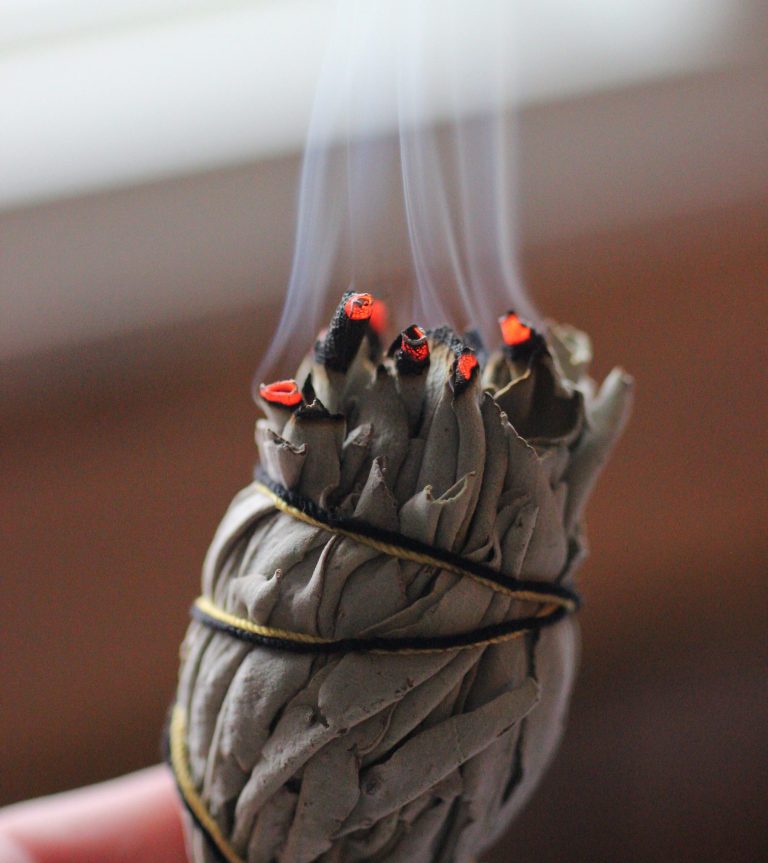
    When doing a mini-cleanse, I either smudge with sage or incense or use sound with a Tibetan bowl. For a full space clearing ritual, though, I set up a mini altar and do several rounds with different elements.

    With Imbolc around the corner, this weekend would be a lovely time to perform a space clearing ceremony. If you’re new to this and you’d like some pointers, I’m outlining my own ritual here for your guidance.

    Set up a temporary altar.

    Clear a surface and place a candle on it. Add your sage or incense, and a bowl or spray bottle of water. If you have a singing bowl, a bell, or a loud rattle, add them.

    If you were to hire a space-clearing professional, they would use these kinds of tools. But there is no need to rush out and buy them — use what you have to hand. Over time, if you find yourself space-clearing regularly, you could invest in some of these items.

    You’ll also want a pen and a piece of paper, on which to write your intention for the ceremony. For this, bring to mind what you want to clear out of your life right now and what you would like to invite in its place.

    For example, if you’ve been feeling stuck in your life recently, you could intend to clear out all energetic stagnation — in your home and your personal energy field — and make way for new opportunities to unfold.

    If you’ve been feeling depressed, you could intend to clear out all lower and negative energies that are lingering in your home. Intent that your home feels lighter, and you feel lighter — and better — when you spend time there.

    If you’ve been neglecting your home, ignoring things that need fixing, not cleaning regularly, or allowing clutter to accumulate to overwhelming levels, you could set the intention to redress that. To be motivated enough to finally get started with fixing, cleaning, decluttering — whatever your home needs to be a happy, healthy, peaceful environment.

    With your intention clear in your mind, write it on the slip of paper.

    Light your candle, take a long slow breath, and declare your intention to yourself. Out loud is best, but silently works too.

    Clearing with sound

    Holding your intention in your mind and heart, stand inside the front door of your home. Then move through it in a clockwise direction, using sound to loosen stuck vibrations.

    If you do not have a bowl or bell, you can do this by clapping your hands up and down the walls. You might notice a different sound and feel to the clapping in different spots. It might feel a bit thuddier (made-up word alert), particularly in corners or cluttered areas. If you do, clap a bit more until it sounds and feels a bit crisper.

    In cluttered areas, the vibration might not change. If that’s the case, keep moving and make a mental note to declutter that area afterward.

    If you have a large home, particularly if you have high ceilings, the clapping can be tiring. Another alternative is to use a saucepan and wooden spoon. Bang the wooden spoon in the pot, again up and down the walls as you move around your home in a clockwise direction.

    Needless to say, this is a noisy technique. But that doesn’t matter. The purpose is to use the sound vibrations to get ‘stuck’ energy unstuck and moving again.

    After you’ve completed a round of the whole house, it would be good to do a second round with a lighter sound if you can. This time use something that tinkles rather than clangs. (Keep an eye out in thrift shops, where you might find a small brass bell in the knick-knack section.)

    Clearing with air

    With the noisy element passed and stagnation starting to shift, open a window in each room. (If you don’t have very nearby neighbors, feel free to do this at the beginning of your ceremony.)

    Now, light a stick of incense or a bundle of white sage. Return to your front door, and center your intention in your mind again. Repeat the clock-wise round of your home, wafting the sage or incense into every corner.

    Complete this stage on each level of your home.

    Once you’re finished, return to your altar and use the sage or incense to cleanse your own aura before you quench it.

    Clearing with water

    Once again, return to the inside of your front door and bring your intention back to mind.

    Now begin another round of your home, this time spraying or flicking drops of water into the space.

    As with the other stages, complete on all levels of your home.

    Ceremony completion.

    Return to your altar and pick up the piece of paper with your intention written on it. Read it over and declare your gratitude to your home for being a safe space to release what no longer serves you and invite in what does.

    If you wish, you can burn this piece of paper. I like to close the ceremony by chanting Om three times.

    Once complete, blow out your candle and remove all altar items to their normal storage places.

    ~ ~ ~

    If you have a large home, the full ceremony probably won’t appeal too often. But it would be a great practice to mark the turning of the seasons.

    And a mini-cleanse with one element is something we could all do regularly. I often do it at Full Moon or New Moon.

    Space clearing reminds me that my home plays an integral role in my wellbeing. And I want to deliberately honor that through physical cleaning and energetic clearing.

    If it’s new to you, I invite you to regard this as self-care and give it a go. It certainly can’t hurt.

    Thank you for reading. You might also be interested in:

    Get your Home in Order and your Life will Follow.

    Treating your Home like a Temple: Why it Matters & How to do it.

    Spring Cleaning is Emotional Clearing.