Author: Hilda

  • True & False Monochrome, and Other Colour Schemes.

    True & False Monochrome, and Other Colour Schemes.


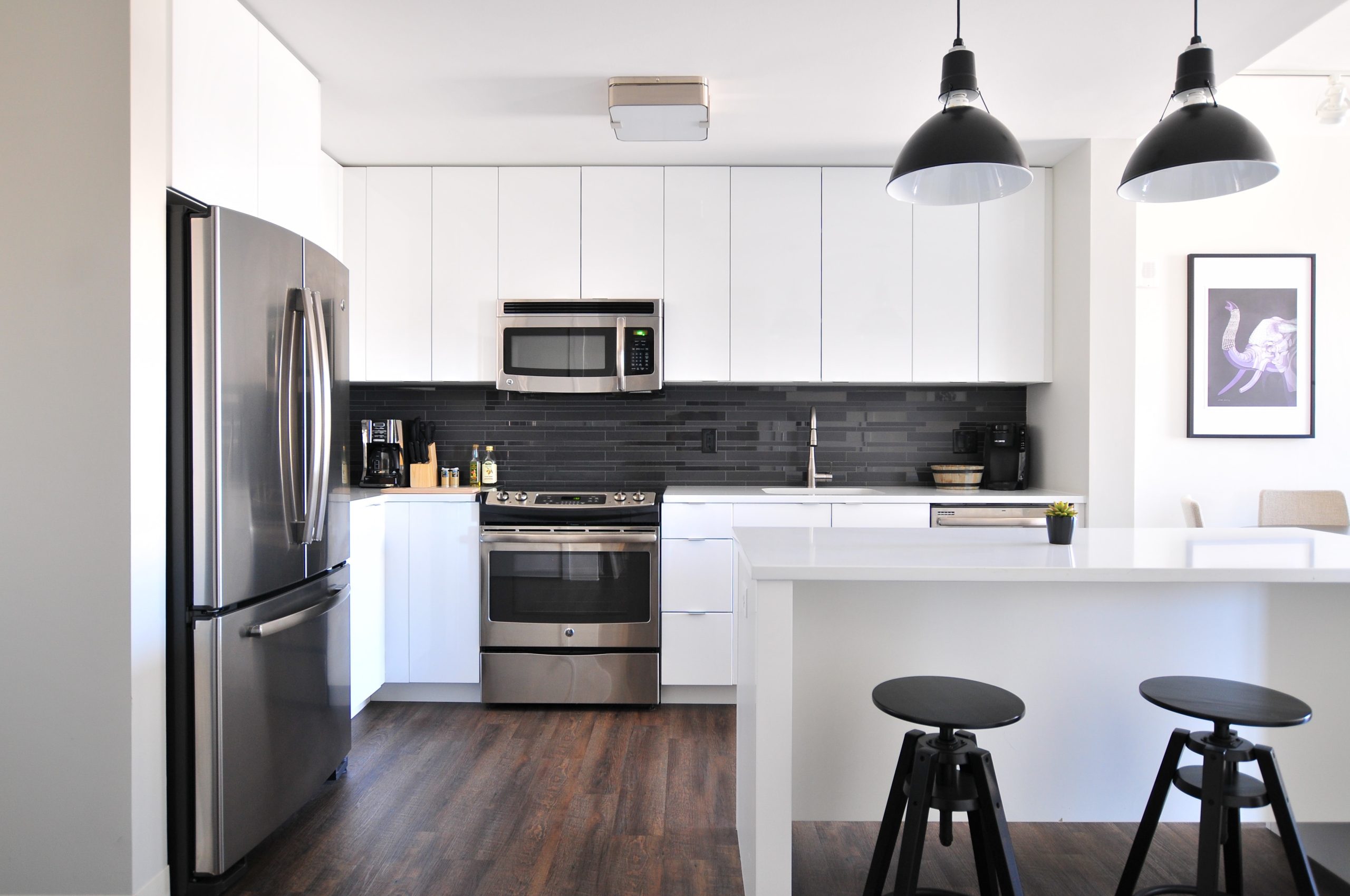
    Photo by Naomi Hébert on Unsplash

    I was half way through my interior design course before I hit the colour module and got something of a shock:

    Contrary to popular opinion – including no shortage of high-profile professionals in the field – monochrome is not black and white.

    And now, whenever an architect on the telly describes a black and white scheme as monochromatic, I want to throw something at the telly!

    I don’t know who’s responsible for first sowing this seed of misinformation, but it has propagated like wild fire. And once you know it’s wrong, you can’t un-know it.

    And you want it to stop. So I’m on a mission to bust the myth.

    Read on if you’re interested to know why black and white isn’t monochrome, what it is, and how do all the other colour schemes work.

    The true Monochrome.

    The clue is in the name, and when you break down the meaning of “monochrome”, you’ll never make this mistake again.

    Mono means one. Chrome means colour.

    So, a monochromatic scheme is made up of one colour. It can have tints and shades of that colour but essentially it is a blend of different reds, or different greens, or different blues…and so on.


    The False Monochrome.

    The kitchen pictured above is achromatic, meaning no-colour. Because, strictly speaking, black is not a colour (all colours absorbed), white is not a colour (all colours reflected) and grey is either a tint of black (white added) or a shade of white (black added). So again, strictly speaking, grey is not a colour (which is why it works so well as a neutral backdrop to a décor scheme).

    Both achromatic and monochromatic schemes are good choices if you want a subdued and restful palette. Another option, but with slightly more variety in colour choice would be an analogous scheme.

    Analowhat?
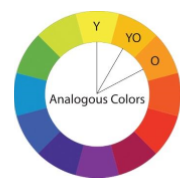
    An analogous colour palette incorporates three colours which sit beside each other on the colour wheel. So, while they could include a yellow and orange, the third colour will sit between yellow and orange. Similarly, a yellow and green scheme would also have a yellow-green colour included. While similar, it does offer more nuances than the monochromatic scheme. One colour usually dominates and the other two are used as accents. 

    Getting Daring with your Colour Choices.

    For more colour variety and contrast, consider one of the following schemes: complementary (two colours), split-complementary (three colours), triadic (three colours) or tetradic (four colours).

    In a complementary scheme we work with two colours that sit opposite each other on the colour wheel. Vibrant and stimulating, it works best if one of the colours is more dominant and the other an accent, rather than giving both colours equal share in the space.

    Using two pure complementary colours can be quite intense, so be mindful of the effect it will have in the space. More subdued tints or shades of two complementary colours can have an equally exciting and interesting result, with less intensity.
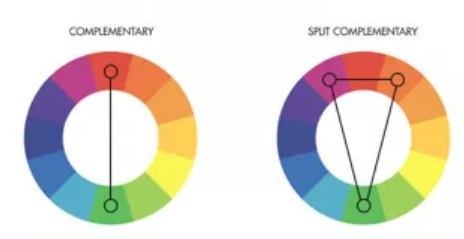
    If you do want to use a pure colour (untinted red, blue, green etc), then consider opting for a split-complementary scheme. Here, instead of pairing your main colour with its direct opposite, you’d pair it with the two colours that sit either side of its opposite. This gives a more subtle complement, but the overall effect is just as interesting and dramatic as a complementary scheme.

    Another vibrant, three-colour option is the triadic scheme, which is composed of three colours that are equidistant from each other on the colour wheel. In this case, we use either the three primary colours (red, yellow and blue), or the three secondaries (orange, green, violet) or three tertiaries (yellow-green, yellow-orange, blue-green, blue-violet, red-orange, red-violet).
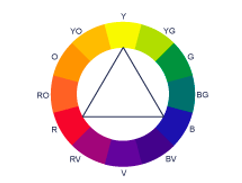
    It can be a popular choice in kids’ rooms – especially using the primary colours which offer great vibrancy and stimulation. Having said that, the primary colours are better for a playroom than a bedroom, where the more subdued effect of tertiary colours might be a better option. There will still be lots of variation for interest, but less stimulation when it’s time for sleep.
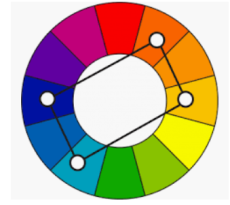
    Tetradic gets even more interesting by adding a fourth colour to the palette. To identify your palette, choose a complementary pair that you’re drawn to and then draw a rectangle on the colour wheel with one colour range sitting between your two complementary ranges. These four colours will work together, providing lots of variety and options for a rich and interesting colour scheme. However, for maximum effect allow one colour to dominate and use the other three as accents.

    How to make it all work.

    Some people have a natural aptitude and can put colours together easily, but if it’s a challenge then a colour wheel such as the one shown here is a great tool. It can help you put together a harmonious colour palette that works around a particular colour you want to have in a room and you can pick one up in an art and hobby shop, or online.
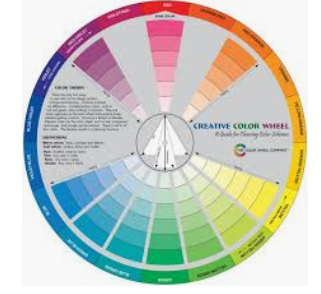
    colour wheel

    Starting with a colour you love, use the wheel to help you choose the rest of your palette, bearing in mind what kind of mood you’re looking to create.

    If you want a vibrant space, look at complementary, split-complentary, triadic and tetradic options. If you want something more calming, look at monochromatic, achromatic and analogous options.

    Use the wheel to help you select the best tint or shade when the pure hue will be too intense for your needs. Of course, these can also help to change the feel of a room, with darker shades making things feel cosier and lighter tints bringing in a sense of airiness, even to smaller spaces.

    We don’t need to be able to remember the name of the colour palette we’ve selected – the wheel is there simply to help us make choices that will work harmoniously, no matter what kind of effect we’re looking for.

    But if you are going to use labels please remember, monochrome is not black and white. 😉

  • To Close the Year Strong, Detox your Home.

    To Close the Year Strong, Detox your Home.

    home detox

    As autumn hits and the end of the year fast approaches, the signs around us in nature are all about endings (to make way for new beginnings).

    Maybe it’s a resistance to what is—such a human quality—and not wanting to let go of the more active energy of the brighter months. Or maybe it’s a sense of panic related to our (perceived) lack of achievement around the goals we set back in January.

    And maybe it’s simply because the “back to school” routine was ingrained in our psyches during our formative years. Whatever it is, autumn often sees us refocusing our attention on what we want to get done before we ring out the old year on December 31st.

    And a good old home detox can be a powerful tool in this process.

    As we clear out our physical stuff, something magical takes place on the metaphysical level. Old mental and emotional issues can come to the surface, to be fully felt and finally released. And clearing out the non-physical, alongside the physical, also clears the path forward. Not only is the physical debris removed, but blocks in our psyches can also be dissolved.

    Hence the popularity of Marie Kondo’s KonMari movement: Clearing out your home really can be magically life-changing.

    And the only way to test the theory is to give it a go.

    Over the coming weeks, why not resolve to clear out as much of your physical clutter as you can—and see what knock-on effect that has on your personal energy levels, your creativity, enthusiasm, and outlook on life.

    There are different ways to approach the challenge. The KonMari method is to organise in categories and to create a huge pile in one place in your home. Pick up each piece, ask if it sparks joy, and if not then thank it and move to a donate/recycle/bin pile.

    For me, this method is overwhelming. I prefer to go room-by-room, or area-by-area. A fantastic resource for this is Declutter your life with Feng Shui by Karen Kingston. As well as guiding you through the decluttering process, it’s a fabulous Feng Shui primer. It’s the book that turned me on to decluttering and, like me, everyone I’ve loaned it to got the decluttering under way before they finished the book.

    When I couldn’t find a start-today online challenge that guides you through the process, I created one myself. My free guide leads you through a room-by-room method through manageable daily tasks. I designed it for those (like me) who get overwhelmed by the very idea of undertaking a giant purge in one day, one weekend, or even one week. (If it appeals, sign up here.)

    You’ll also find thousands of videos on YouTube to guide, inspire, and motivate. The most important thing is to get started. Start with your purse, with a single drawer, with the cupboard under the kitchen sink. Once you get started, an energetic momentum gathers and it’s much easier to keep going.

    The home detox golden guideline is this: love it, use it, or lose it.

    If you feel able to commit to clearing a full room or area, but are wondering where to start, try the entryway to your home. Make it so that it uplifts your energy every time you walk through the door. Clear away the summer jackets, shoes, and bags, and bring out what you’ll need for the coming new season. Organise a system for keys and whatever else you usually grab on your way out. And place something on a wall or shelf that will cause you to smile when you come home.

    Hopefully, completing one area will motivate you to detox another. When resistance arises, remember that it will reap benefits on the metaphysical realm as well as the physical.

    View your home detox as a self-care exercise, because that’s precisely what it is. On a well-being level, we gain so much more than we lose. And all that we lose, we no longer need anyway so there’s really no losing involved. It’s win-win all around.

    First published on elephantjournal.com

    Photo by Sarah Brown on Unsplash

    Thank you for reading. You may also enjoy:

    Decluttering is an Act of Self Care.

  • Free Meditation Challenge: Five Minutes for Five Days

    Free Meditation Challenge: Five Minutes for Five Days

    free meditation challenge

    Photo by v2osk on Unsplash

    UPDATE: The live meditation will take place at 8.45am (Irish time) each morning on my Facebook page. Click here to follow it. If you register by email (recommended – it’s easy to miss FB posts), you’ll get a reminder at 8.30am and I’ll also email you a link to the replay afterwards. The link to register is at the bottom of this page. If you’re new to meditation and want to receive the video tutorial (only eight minutes long), that link is also at the bottom of this page.

    Harnessing the Back to School energy that September often infuses in many of us, long after we’ve left our school days behind, I’m planning on hosting (subject to interest) a free meditation challenge from Monday, September 9th until Friday, September 13th.

    The idea is to help people re-start a practice that has fallen by the wayside. However, complete beginners are welcome too (keep reading below).

    From Monday to Friday, I will guide you into a five minute mantra meditation (although you’re welcome to practice whatever meditation technique you prefer). Ideally, we would meditate for 20 to 30 minutes twice a day. However, five minutes is absolutely worth doing – especially if you make it a daily practice. The benefits accrue over time and once you start to experience them, you won’t want to skip this part of your day.

    And if you’re struggling to fit a meditation practice into your day, this collective five minute challenge may help you to build it into your daily routine.

    The other ideal, is that we start our day with meditation. But depending on our circumstances, that isn’t always the most realistic option for many. With both of these things in mind, I’m planning on guiding the meditation live in the morning (time to be determined – see this poll on Facebook to feedback on what time would work best for you). But for those who can’t make the live morning session, I will both post the video on my Facebook page afterwards and email it to you. This will ensure you get a daily reminder and the opportunity to practice at whatever time of the day suits you best.

    For complete beginners, I will record a lesson that will be made available over the weekend of September 8th/9th. This class will be available on a donation basis. Suggested donation is €5 but you can pay what you want. The video will be emailed to you on Saturday morning so that you can take the class at the time that suits you best, and be ready to join in with the free meditation challenge from Monday morning.

    To read more about how five minutes a day can make a difference, click here.

    To register for the free meditation challenge, click here.

    To register for the Meditation Lesson, click here. (Donation link will be provided when you’re sent the video lesson.)

    To input into the time for the live daily meditation session, click here.

    NOTE: This programme does not provide medical or other professional counselling advice and is not intended as a substitute for the advice or supervision of professional services, or any other support you may need.  Please consult your doctor before starting if you are being treated for severe mental health issues or brain-related conditions.

  • Put your Money where your Mindful is.

    Put your Money where your Mindful is.

    Vote with your wallet for the future that you want.

    vote with your wallet

    Every day, we make choices that either influence a future change in policy or maintain the status quo—and most of us do this unconsciously.

    In my opinion, the most effective way each of us can bring about positive reform in politics and economics is to shop more consciously. Vote with your wallet, because, to anyone who’s paying attention, it would appear that most Western governments are in the pockets of big business. Even if they wanted to bring in progressive new policies, fear of the economic impact of big corporations moving their operations elsewhere gets in the way.

    As voters, we have a say over who gets to govern our countries and economic policies. But, once the elections are over, much of our political power is suspended until the next occasion to vote arises. In the interim, hundreds of decisions are made that affect our personal and universal health, wealth, and environment.

    And voters are left feeling angry, frustrated, and often betrayed.

    Despite our seeming lack of power, however, it is possible for us to dictate a change when we vote with our wallets.

    This does take a little bit of effort, but its effort we can’t afford to neglect at this stage in the game. We need to equip ourselves with information about ethical and sustainable products. We need to shop around to find them. We may need to cut some products right out of our lives, and pay a more premium price for others.

    It definitely requires more effort to shop ethically and sustainably on a tight budget, but it is possible. The internet is littered with resources to help us do that, but here are a few suggestions for what to consider:

    >> When it comes to clothing and furniture, look at second-hand options before hitting the high street stores. And for new items, support businesses with a local, eco, and ethical mission.

    >> Grow some of your own food—even if it’s just herbs, lettuce, and spring onions on your kitchen window sill, it’s a start. And with some easy successes, it can become addictive and you’ll start exploring what else you can grow in a limited space. You’ll be surprised at the available options to grow on a window sill or balcony, let alone what you can do with a little outdoor space.

    >> If it comes in plastic, don’t buy it. Choose an alternative that comes in paper or cardboard. If that’s not an option (and it’s legal in your state to do so—best to check) remove the excess plastic packaging at the store and leave it there. When enough people do this, the stores will begin to put pressure on suppliers to reduce or eliminate plastic packaging. (Also, the extra effort it takes to make this little protest will motivate you to seek out more non-plastic packaged products.)

    >> On that topic, get your own re-usable coffee cup and water bottle and stop using disposables (and say no to plastic straws).

    >> If you’re a meat-eater, consider taking part in the Meat-Free Monday movement (and also cutting down on dairy consumption). As animal agriculture accounts for at least 32,000 million tons of carbon dioxide per year—that represents 51 percent of all worldwide greenhouse gas emissions—the single most impactful action each of us can take to positively affect climate change is to cut out animal products altogether. But if that feels too extreme, baby steps do make a meaningful difference. One person going meat free three times a week saves the equivalent of 26.7 days of personal water use and the carbon equivalent of boiling 1165.2 kettles.

    >> Check the ingredients on all your usual products and research more ethical and sustainable alternatives where needed. Purely from an environmental perspective (and often with the added bonus of a humane and compassionate perspective too), products we want to avoid purchasing would be fossil-fuel derivatives, anything containing palm oil (check all your processed foods, soaps, shampoos, and detergents), and anything that comes with excessive packaging.

    I’m not going to lie to you. Being a conscious consumer takes more time than the more mindless variety. And it’s not always possible to apply our principles in shopping for everything we need. However, when we excercise discernment to the best of our ability—for every single thing we buy—we are exercising a power we often don’t realize we have.

    Any movement can begin with one person. A critical mass is reached as more and more individual people get on board. And when enough people shop conscientiously, to the extent that it starts to affect profit margins, producers will look at reform.

    I’m a big believer in baby steps, rather than all or nothing. If going all-out (such as becoming vegan overnight) is a stretch too far, then start small. Choose one regular item that you shop and find a more ethical alternative. And when that becomes a habit you’re comfortable with, choose another item.

    Build up over time if you have to, but it’s time to stop sticking our heads in the sand. It’s important for all of our survival that we each assess our own shopping habits and begin to make different choices wherever and whenever we can.

    First published on Elephant Journal
    Image: Guus Baggermans 

  • New Moon Meditation: Sowing Seeds for Love, Joy & Abundance

    New Moon Meditation: Sowing Seeds for Love, Joy & Abundance

    new moon meditation

    Once upon a time I was keen on manifesting my desires. Now, I’m more interested in surrendering to the Divine’s plan for my life.

    That’s not to say I don’t experience any desire for particular things and experiences. It’s just that I’m aware of the old adage, “Be careful what you wish for”. What we desire is not always for our highest good.

    And equally, what we desire may be entirely for our highest good and be fully aligned with Divine’s plan for us.

    So, under the tutelage of the wonderful Tosha Silver, I like to surrender my desires now—either to be manifested or dissolved, whichever is alignment with the highest path for me to follow at this time.

    Rather than focus on specific outcomes I’d like, I focus on the essence that I perceive this outcome would deliver to me. For example, the experience of love, joy, peace, abundance rather than winning the lotto, securing a particular job, chasing any kind of relationship etc.

    And as it’s New Moon—the time for sowing seeds for what we wish to create in our lives—I thought I’d share this brief and simple meditation. Whether there’s something big and new you’d like to create in your life, or you’d simply like to mindfully renew ongoing intentions, I invite you to take a few minutes out of your day to sit with yourself and harness the power of the moon.

    Begin by tuning into your breath. Notice, without altering its natural rhythm, the pattern of your breathing. Sit for a couple of minutes in observance of your inhalations and exhalations.

    Then bring to mind whatever it is that you’d like to create for yourself, whether that’s an experience, or a way of being. Imagine that intention is a seed and see yourself sowing it in the earth. Visualize yourself watering it daily and trusting that it will sprout and bloom at the right time. See that happening in your mind’s eye—the initial seedling emerging and growing taller and stronger each day.

    Now see it fully grown and flowering. Imagine how you’ll feel when your intention has come to fruition. Feel into that reality and allow the feeling to fill up your body and radiate outwards to fill up your aura.

    Sit in this feeling for a few minutes. With each inhale focus on drawing this feeling into your everyday life. With each exhale focus on its expansion.

    When you feel full and complete, bring your attention back to the present moment and return to your daily activities.


    Photo by Zoltan Tasi on Unsplash

    First published on Elephant Journal.

    You might also be interested in:

    28 Day Online Meditation course

    A Full Moon Meditation to Release for Releasing our Troubles

  • A Full Moon Meditation for Releasing our Troubles.

    A Full Moon Meditation for Releasing our Troubles.

    In metaphysical circles it is widely held that the energy of the new moon supports us in sowing new seeds, or intentions, for what we wish to create in our lives.

    Image: Guillaume M/Unsplash

    And the energy around the full moon supports us in letting go of what no longer serves us.

    Of course, we can set such intentions at any time. However, working with the energies of the moon can help to super-charge those intentions.

    With that in mind, the following is my Full Moon Releasing Meditation.

    The intention is to consciously sit with an issue that is currently causing us discomfort—feeling it in order to heal and release it.

    Too often, the temptation is to suppress or deny whatever is causing us mental and emotional discomfort. We may distract ourselves by indulging in behaviours that help to numb ourselves from the pain. The effect, however, is only temporary—what we resist persists. Our denied feelings don’t go anywhere. Instead they are stored in our bodies, where they wait to be triggered again in the future.

    By tuning in to these trapped feelings, and sitting with the issues they are rooted in, we can start to release them from our bodies. And with that, we can also release the power the trigger holds over us. Instead of turning away from it, we can look it in the eye, recognize what it is, acknowledge how it has affected us in the past, and choose to feel it so that its intensity may begin to disperse.

    If there is an issue that has been cropping up for you lately, this meditation is an invitation for you to sit with it a little bit, and then release it. (Guided audio is available at the bottom of the page.)

    To begin, allow whatever has been troubling you to come up and be in the foreground of your consciousness.

    As you sit with it for a few minutes, notice where in your body you might be feeling uncomfortable sensations. Doing your best to disregard any mental chatter around the issue, bring your full attention into your physical body. Observe what part of your body is asking to be noticed and simply sit with the physical sensations.

    After a few minutes, enter into a silent dialogue with the pain or discomfort. First of all, acknowledge it. Greet it, and tell it that it has your full attention. Ask it if it has any message for you. Where does it come from? What does it want you to know?

    Ask these questions, but do not strive to answer them. If thoughts pop into your mind that may be answers, simply trust and accept them. If nothing comes, that’s okay too. Sometimes the answers come later, when we are not “trying” to find them.

    Having spent a few minutes sitting with the physical sensations, gently acknowledging them and listening for any messages they wish to send you, bring your attention to the crown of your head and imagine the bright light of the moon shining directly above you.

    Allow this light to pour down through your being—imagining with every inhalation that you are breathing in pure love. As you slowly exhale, imagine you are also breathing out all that no longer serves you.

    Breathing in whatever strength and resources you need right now.

    And breathing out whatever it is time to release.

    Continue for another couple of minutes, consciously breathing in whatever needs to come to you at this point in time. And breathing out whatever needs to go.

    When it feels complete, bring your attention fully back into the present moment and slowly open your eyes.

    First published on elephantjournal.com

    You might also be interested in:

    Demystifying Meditation: a Skeptic’s Guide

    28 Online Meditation Course

  • The Immense Difference a Lick of Paint can Make.

    The Immense Difference a Lick of Paint can Make.

    power of paint bathroom 1

    Never underestimate the power of paint to have all kinds of transformative effects on a space.

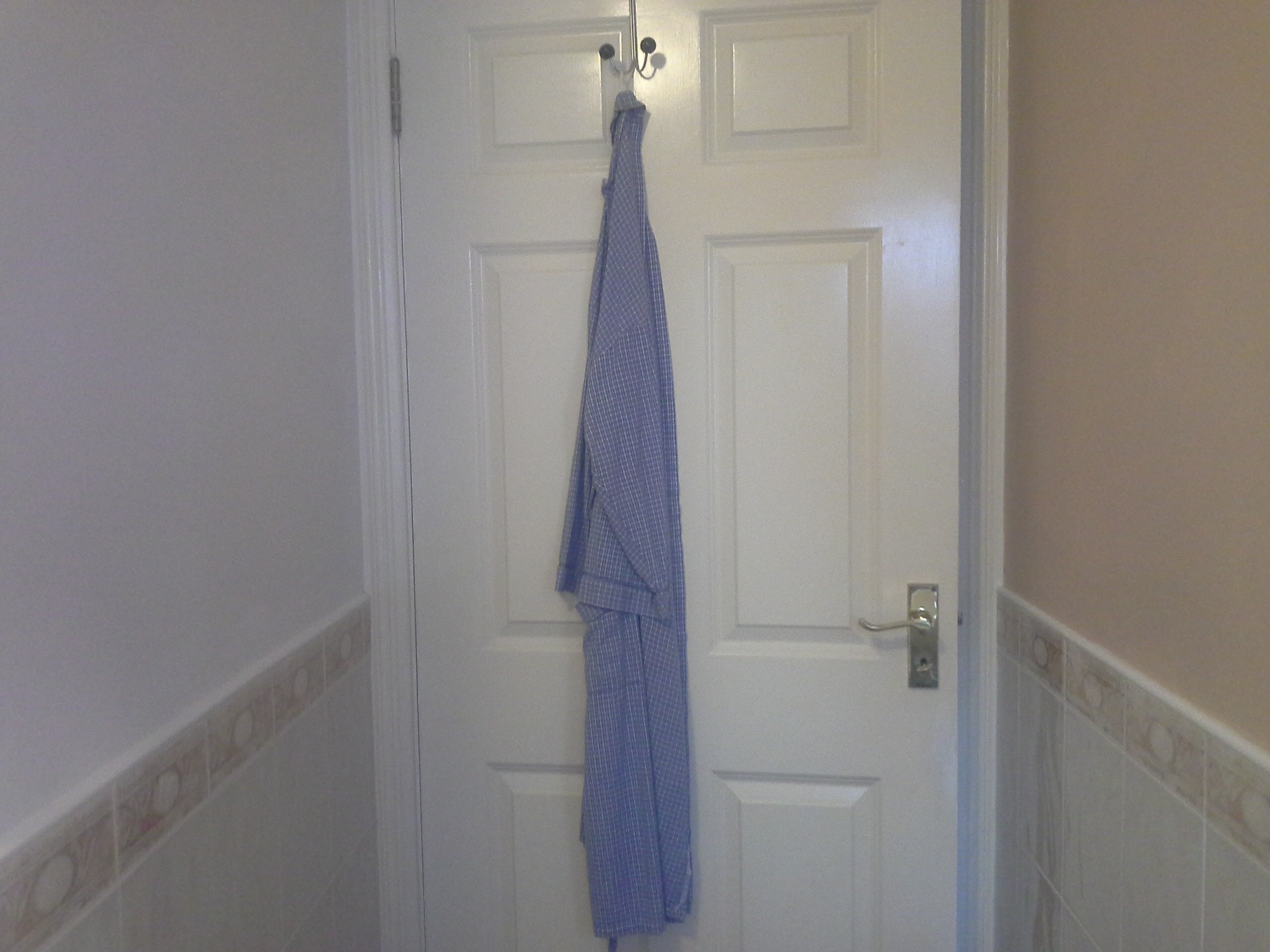
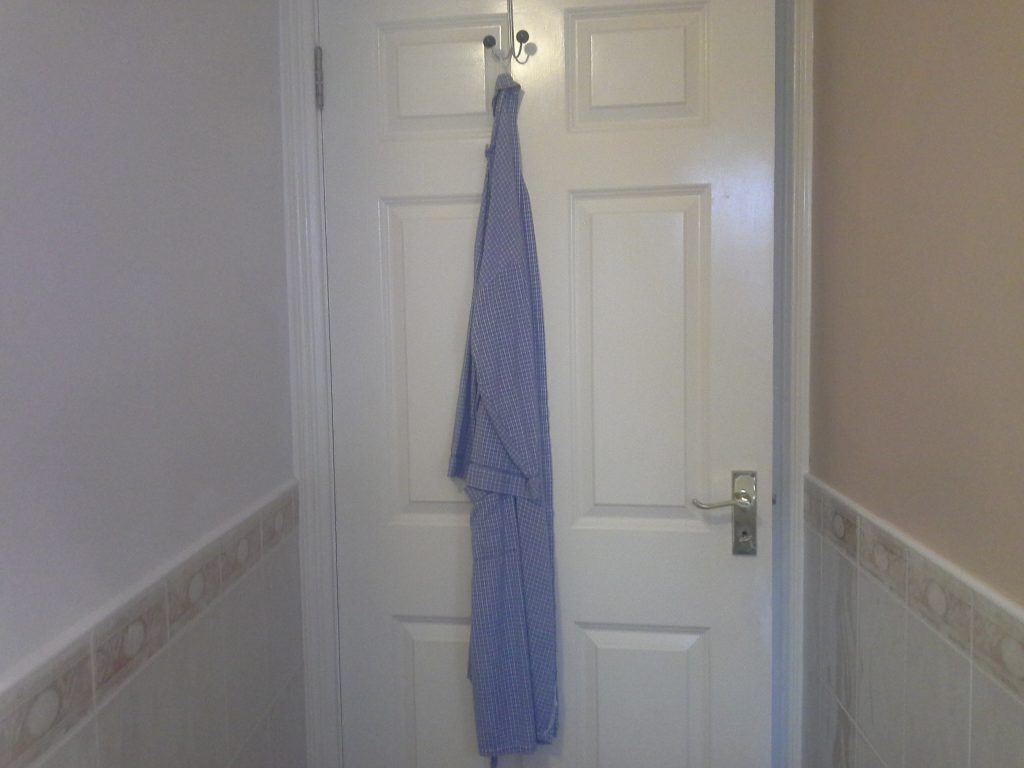
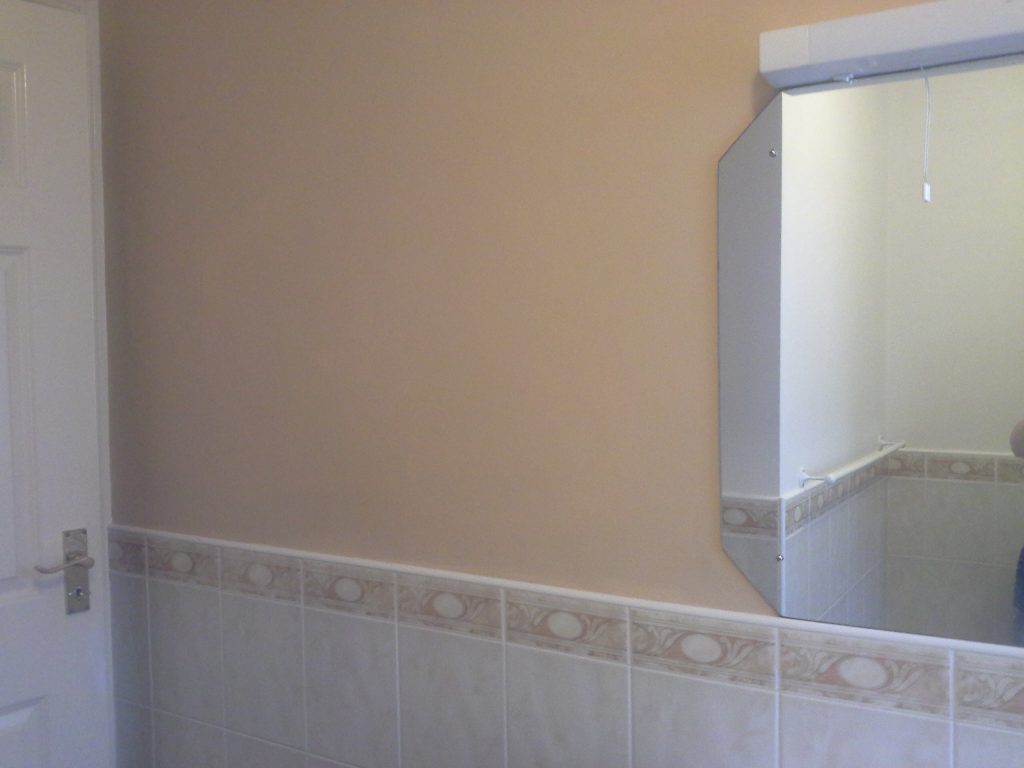
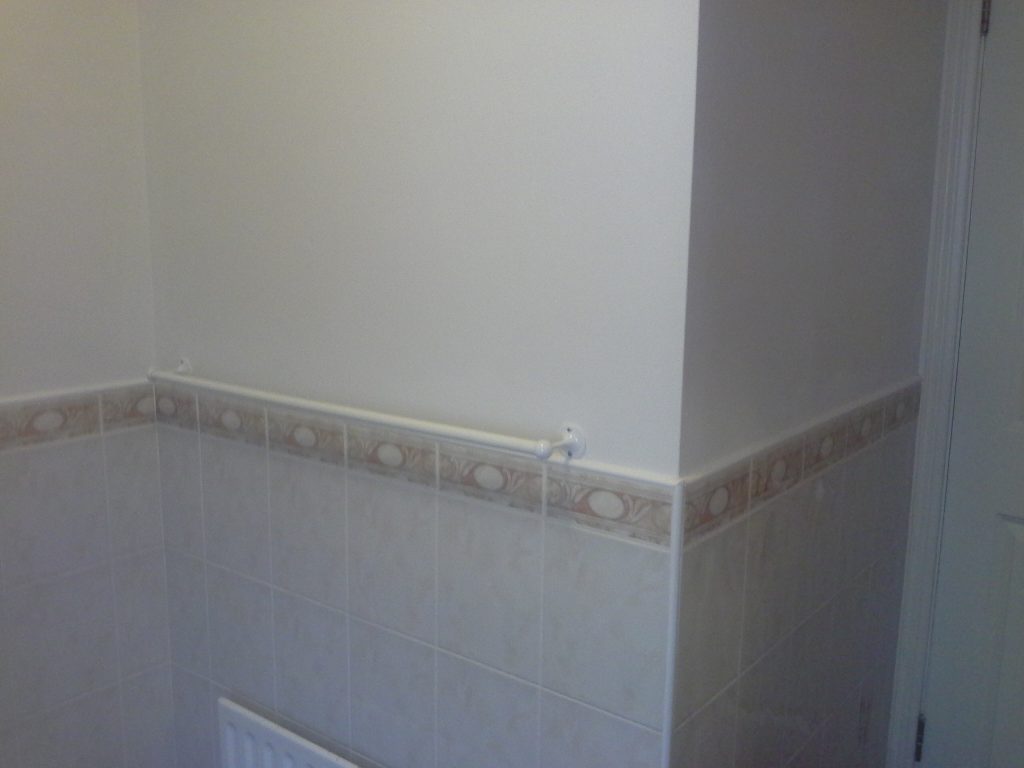
    Here I’m showing you an incomplete makeover, to illustrate the powerful difference a new paint job can make – even if you don’t change anything else. On the right we have the old colour, and on the left the new.

    This is a small L-shaped bathroom with a small west-facing window. So except for particularly bright evenings the natural light progresses from dark to dull as we move through the day. (Last summer it did well in the late afternoons and evenings, but this year it just never gets bright.)

    The wall colour, a kind of muddy peach, was chosen by previous residents to work with the (dated) tile. I’ve always disliked the tile, but it was the wall colour that really bugged me. I knew from the day I moved in that I’d be repainting it….it’s just taken me a lonnnnng time to get around to it.

    As this is a rental property, I have to live with the tile. Luckily though, it isn’t floor to ceiling and I have the opportunity to make a difference with paint. I’ve gone with a slightly grey white (the base colour of the tiles has a grey tone). Even without strong, bright daylight you can see a huge difference with only one side of the room re-painted.

    The room is already brighter, which is not that surprising given the new colour is white. However, what is pleasing me the most is how toned-down my dislike of the tiles has become. Not because I like them better now, but because the new colour is toning down the overall impact they have in the room. The old colour, chosen to “work with” the tiles really highlighted the them and made them hard to ignore.

    But the white walls now de-emphasise them as a feature.

    Painting walls is not my idea of fun – hence the long procrastination on starting this job! But now that the difference is more visceral and less aspirational, I’m motivated to finish the job. Stay tuned for the final reveal later this week.

  • Spring Cleaning is Emotional Clearing

    Spring Cleaning is Emotional Clearing

    spring cleaning

    What Makes “Tidying Up” So Magically Life-Changing?

    Spring cleaning—a thorough and deep cleanse of our homes at the end of winter—is a common tradition that’s as old as the hills. In many cultures it marked the onset of a religious or seasonal celebration or festival. The home was cleaned as part of a preparatory purification process.

    And over the ages, it has somehow seeped into the crevices of our consciousness – this need to clean house as we emerge from the darkness of winter. When the sun shines brightly and highlights the smudges from months of wet weather on our window panes, we want those smudges wiped clean so we can see clearly beyond them. We want to be able to fully take in the beauty of the burgeoning springtime.

    And when we do clean our windows (and all the other grimy corners of our homes) we just feel so good afterwards. Lighter and brighter.

    Spring cleaning is the ancient precursor to the modern-day practice of decluttering, the benefits of which Marie Kondo is helping to bring into the mainstream. Decluttering is a whole other level of work that often needs to be done before we can even get to the spring cleaning. It has evolved from our insane levels of accumulating stuff.

    Most of this stuff we don’t need to live a functional and fulfilling life. However, its acquirement has been salving some part of our souls that have been crying out for something—and the stuff gives us a brief feeling of having satisfied that need. It’s because of this subconscious association between our stuff and our emotional needs, or our unhealed traumas, that decluttering can have such a life-changing effect.

    Truly, spring cleaning and decluttering does more for us than the obvious. The immediate, joyous effect is a beautiful calmness that descends on a room that’s recently been cleaned and cleared of cobwebs and unused, unloved stuff. But the long-term benefits can run much deeper.

    When we clear out our physical space we also clean up our energy—physical, spiritual and emotional.

    When we change our inner world it impacts on our outer world. And when we change our outer world it impacts on our inner world. Because our minds, bodies and spirits operate as an integrated whole, when we make improvements on one level we invariably start to experience improvements on other levels too.

    And so, if we’re feeling stuck in some area of our life, by clearing up our physical environment we can give ourselves the mental, spiritual or emotional boost we need to get unstuck and get going again.

    Here comes the science bit…(if you consider Feng Shui a science, that is—I prefer to look on it as an art).

    Feng Shui (pronounced Fung Shway) is an ancient Chinese practice of balancing the elements of the environment and optimizing the flow of energy or chi. An environment where the energy can flow freely allows for good health, wealth and relationships. And the converse also applies.

    Clutter causes the energy flow to stagnate, and the areas of our homes that are cluttered often represent corresponding areas in our lives where our energy may be stuck (and where circumstances may also be less than favorable).

    An achievable solution? Keep our home environment clean, organised and simple. Don’t overcrowd rooms, cupboards or drawers with furniture, books, clothing or any other apparel that we don’t actually use, or love.

    There’s a simple rule: have only what we need and adorn strictly with items we love. And nothing more!

    Poverty Consciousness versus Prosperity Consciousness.

    It’s certainly pleasing and comforting to look around our homes and see that we have plenty. That fosters a feeling of abundance. But when we have stuff jammed into cupboards and drawers that we can’t even access because they’re so full, then we have unnecessary excess. And far from fostering abundance, it actually blocks the flow of abundance.

    Ironically, hanging onto all our possessions regardless of whether or not we need them is known as poverty consciousness. Which simply means that we don’t trust that we will always have whatever resources we need, whenever we might happen to need them. Prosperity consciousness is trusting that whatever we need will always be available to us at the time we need it.

    So, instead of hanging onto something that we might need ‘someday’, the answer is to let it go. Trust that if you do ever need such an item in the future, either you will have plentiful resources to acquire another, or you will receive one as a gift at the perfect time.

    I used to be like a squirrel, afraid to throw things out in case I’d need and regret it later. I don’t do that anymore, and somehow or other I generally have what I need when I need it. (I might not always have what I want, but what I want isn’t always for my highest good!)

    Paring back our possessions to only those that we actually use and those that make our hearts sing doesn’t just lighten up our homes. It lightens our hearts too. So much of the unnecessary stuff that we accumulate is bound up with an emotional need or pain. Making the choice to let go of the items often brings up the pain. And when we sit with it for a while, acknowledge it, feel it, its grip on us starts to loosen. When we choose to let go of the item, we often let go of the pain too.

    And sometimes we can go through a massive clear out without the emotional stuff getting in the way of the clearing—but we still benefit from a freeing lightness anyway.

    Even if you don’t believe in the energetic principles of Feng Shui, living in a decluttered environment has many practical benefits:

    • Less items to accumulate dust makes it easier to clean and improves respiratory health issues.
    • Precious time is saved when we no longer need to hunt for items.
    • Decluttered spaces are calm spaces, and calm spaces are easier to relax in than busy ones.  They promote greater relaxation.
    • We can use our space and furniture properly—for example, sitting to eat at the dining table instead of balancing a plate on our lap because the table is buried under books, paperwork and ironing.
    • We can see all the clothes we own and access them more easily.  Although the quantity of our clothes will decrease, the variety of what we now wear will probably improve.

    When our homes only contain what we need for the day to day functioning of our lives, and just enough artistic and decorative pieces to give us a lift, we gift ourselves with a home that is so much more than a shelter from the world. It becomes a true sanctuary for our bodies, minds and souls.

    Piles of stuff that need to be sorted through, or cleared around, or moved when we need to get to whatever they’re blocking, is a constant drain on our energy—even if we’re not conscious of it.

    A home that makes our heart sing doesn’t need all that much. Simply surround yourself with items that you truly enjoy. Our home is our castle and it’s in our best interests to enable the energy to flow easily and make it as uplifting a space as possible.

    So, if you’re a bit of a squirrel, but skeptical of the energetic benefits, I challenge you to have a clear out of just one room of your home and pay attention to what you notice in your life afterwards. It will be an interesting experiment and all you have to lose is your clutter.

    First published on Elephant Journal

    Photo: Volha Flaxeco/Unsplash V

    If you’d like some help getting started with decluttering, why not join my free 30 day challenge.

  • WIN a Room Design!

    WIN a Room Design!

    [masterslider id=”1″]

    A Free Room Design is up for Grabs!

    Are you planning on updating a room in your home, and would welcome the help of an interior designer? I’m running a competition over on Facebook and one person will receive the prize of a room design, which includes all of the following:

    • Initial consultation to discuss desired changes, style and budget
    • Mood board including recommended colour palettes
    • Space plan & room design
    • Suggested shopping list (based on the agreed design and your budget for the project)
    • Assistance with the final styling of the room

    This competition is open to people living in Mayo, Galway, Clare and Limerick (Ireland) as I plan on visiting the space in person before getting started. However, the next competition will be for an e-design and that will be open to people living anywhere.

    In the meantime, if you’re in the geographic catchment area and planning a room makeover, then tell me a bit about your space in the comments below. (And be sure to like my Facebook page if you don’t already.)

    Or if you know someone that might be interested please let them know.

    Terms & Conditions: The winner agrees to have their space photographed/filmed at before, during and after stages (although you don’t have to personally appear if you don’t wish to). The process will commence in mid March with the initial visit and brief and the winner agrees to actively participate in implementing the agreed design, with completion by mid May 2019.

    You might also be interested in:

    Pick My Brain

    Room Design Services


  • Spring is Coming: Why you Should Set your New Year Intentions Now.

    Spring is Coming: Why you Should Set your New Year Intentions Now.

    At the beginning of January, the world is awash with new year intentions and resolutions—and before the month is out, most of them have fallen by the wayside.

    There are many reasons for this, and often they stem from the place where we set them (e.g. self-loathing instead of self-love).

    However, one I rarely see discussed—and which I firmly believe plays its own role—is this: it’s simply the wrong time.

    January is in the depths of winter. Although the days are beginning to get longer, it’s still a dark month. And cold.

    It is a time for hibernation. For deep reflection.

    And for relishing in the opportunity to snuggle indoors and dream about our year ahead.

    Setting new year intentions and resolutions early in this month can be somewhat self-defeating because we have to dig quite deep to get ourselves into motion. We have to rely on willpower rather than a natural spark of energy. And willpower is a battery that can run down very quickly. I’m sure it works well for the determined Type A personalities, but for the rest of us, there is an alternative approach we can choose.

    If instead, we spend the month of January playing around with ideas about what we could do (not must, or should) in the coming year and wait just a few weeks before we commit ourselves to action, we might see different results.

    February marks the approach of spring. We start to see more light in the mornings, as well as the evenings. And the increasing daylight has a more noticeable effect.

    In the coming weeks and months, we’ll prepare the ground and start sowing seeds in our gardens and on our window sills. These seeds will grow into food to nourish our bodies and flowers to nourish our souls.

    Why not align our minds with the natural rhythms of nature and choose this time to sow the seeds for our life changes too?

    Spring puts a bounce in our step. If our bodies are aligned with the cycles of nature, we do feel a sense of reawakening after the slumbering months of winter. As the days and weeks go by, it becomes easier to motivate ourselves to go outdoors for a morning or evening walk, a run or a social gathering.

    It makes sense that this be the time when we decide to implement changes—if we feel that’s appropriate for us.

    And before we decide on how we’re going to make changes, it’s helpful to lay the foundation by decluttering. (It’s the equivalent of weeding the soil before we sow our seeds.)

    If we want to welcome in something new or different, we need to make space in our lives, and spring cleaning our homes has a magically cathartic effect on our hearts and minds. Do it mindfully, holding the intention for what you want to draw into your experience, and more pertinently, how you want to experience your world.

    While clearing out whatever is no longer of use, it’s helpful to reflect on the true desires underpinning our goals. What is the essence, or the feeling we want to experience? Setting intentions around that will help us to be kinder and more realistic in deciding the paths we will follow to achieve them.

    While I do believe any day is a good day to start over, I also believe in harnessing the power of nature when it can help us. And right now, in nature, we are on the cusp of endings and beginnings. So now is a great time to say goodbye to what no longer serves us and make space for something new. Springtime is a better time for setting our new year intentions.

    So if all your resolutions have already melted away into the river of abandoned goals, then consider revisiting them again in the coming weeks with a fresh perspective.

    Image: Markus Spiske/Usplash

    First published on elephant journal.