Tag: colour effects

  • Pro Tips to Elevate your Home Décor.

    Pro Tips to Elevate your Home Décor.

    Last week Ireland’s House and Home magazine reported that their May/June issue was the best selling in ten years! Proof, if you needed it, that lockdown has significantly amplified the desire to update and upgrade our home décor.

    I personally believe that loving our homes is an important self-care practice. That involves caring for it regularly on the basic level of cleaning, decluttering and organising. But it does also involve tweaking the décor until it feels right and makes our hearts sing.

    When you look around your home, if you feel it needs updating in some way but you’re not quite sure how to give it that elevated touch, I’m going to share a series of tips to help with that.

    In this first post, we’re going to look at colour, which has the power to dramatically change the look and feel of a space even if you don’t do anything else.

    I’ve already written a couple of posts to help choose your colour palette, and they’re linked at the end of this one. So what we’re going to look at here is not so much what colours you choose, but some atypical ways to apply them that will give your décor that little extra touch.

    Let’s start at the top.

    When it comes to ceilings, white isn’t the only way to go. And if it is what you decide on, you can still make subtle changes to the typical white ceiling.

    Interior designers regard the ceiling as “the fifth wall”. And we make a conscious choice as to what colour to paint it. That’s not to say we won’t go with white. Often—and more often than not—we will.

    However, designers probably won’t go with the common “brilliant white”. Especially if the plan is to paint the walls white too. They’ll consciously choose a particular white from a particular brand because they love the particular effect that it has in rooms with the same orientation as the one they’re working on.

    To give your own home that elevated touch, make deliberate choices about every colour you apply to every surface—including the ceiling.

    If you’re painting it white, avoid “brilliant” and choose something a little softer. And if you’re painting the walls white, get several samples and test them on each wall in the room before you make your final choice. And then paint the ceiling in the same hue.
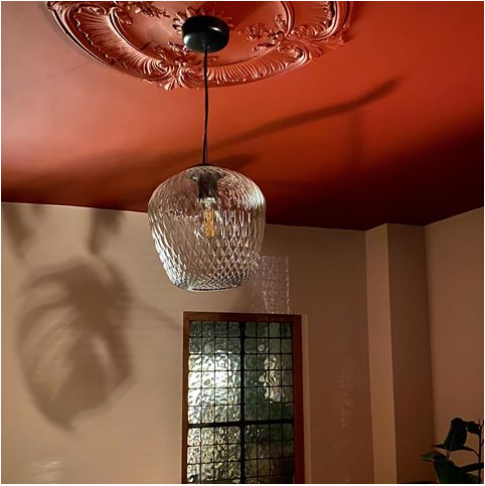
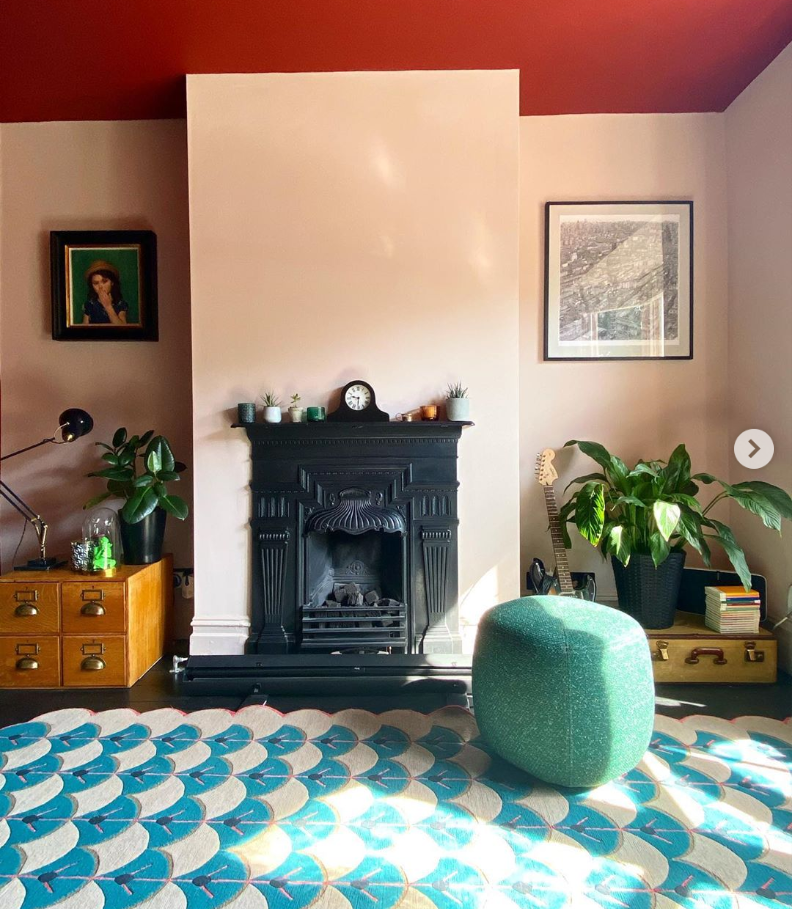
    And if you want to get even bolder, consider using an actual colour on the ceiling instead of white! When a designer wants to make a strong statement in a room, this will be something they might include in the mix.

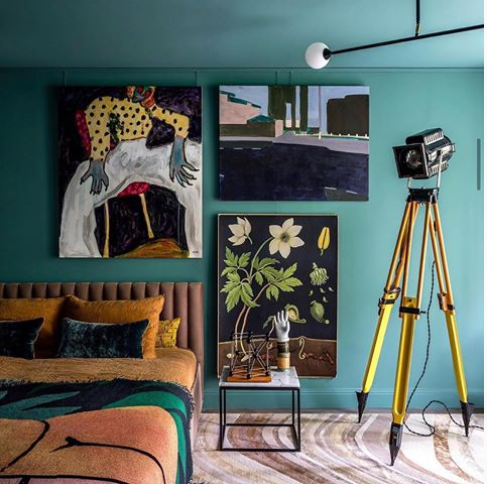
    It’s a particularly good technique if you have a small, north-facing room that is never going to be a bright space no matter how many light-enhancing strategies you apply. You might hear a lot about “embracing the dark”, which designers will often recommend in these situations. It means intentionally designing the room to feel cosy and snug, instead of trying to make it feel lighter and brighter with pale colours, mirrors and other reflective surfaces.

    If it’s a small space, with small windows and not getting any southerly light, going the cosy and snug route has the highest probability of success.

    Painting the walls and ceiling a dark colour will help tremendously with that. But if that feels a bit too adventurous, you could paint the ceiling a paler tint of the wall colour, and still achieve that cave or womb-like feeling. It’s definitely something to consider, especially in rooms that are mostly used in the evening time.

    The Woodwork: Doors, Architraves and Skirting Boards.

    For all of these surfaces white, again, is usually the default choice. For many of us, we didn’t even choose it. It was the builder’s finish and we’ve never thought to change it. When refreshing was required we simply stuck with the white.

    As with ceilings, I’m not saying to abandon white altogether. It really does depend on your wall colour. For example, if the walls are grey, then white doors and trims will look really smart beside them. I’m just saying, make a deliberate choice. There are lots more options besides white and natural wood. If your walls are green, search Pinterest for “green living room” and see what others have done with their doors and woodwork. Look for something that gives you a little lift and makes the décor around it sing.

    Opting for colour instead of white on any of these surfaces will have an impact. If the room is on the small side and you want to increase the sense of space in it, then painting the doors, skirting, architrave and ceiling the same colour is a great trick to apply. It blurs the boundaries of the room, whereas a white ceiling and doorway make them very clear.

    If you’re not concerned about creating a more spacious feeling, then think about using a contrasting colour for either the doors and trims, or the ceiling (or both), for a very dramatic impact.
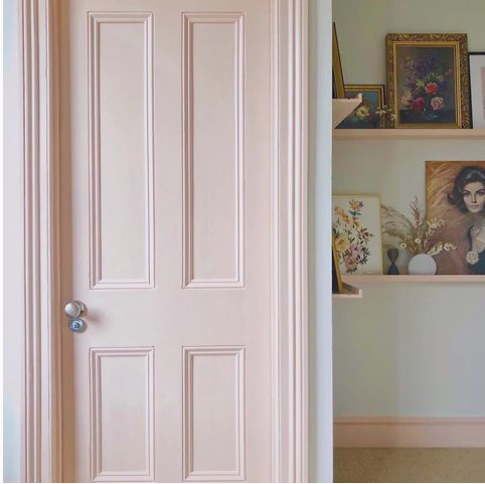
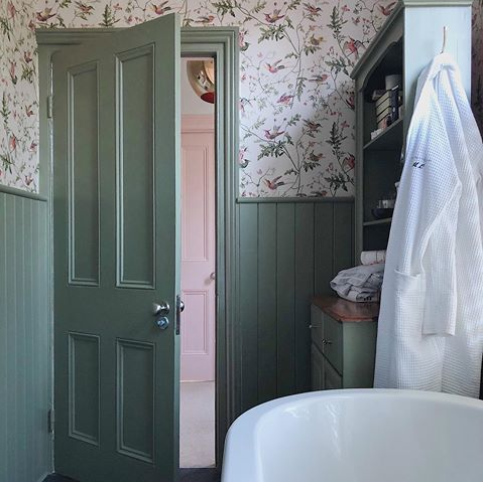
    Most importantly, think about what kind of feeling you want people to experience when spending time in the room and choose your colour palette accordingly. (More information on that in the blog posts linked below.)

    For a restful feeling, choose an analogous colour, and if you want a more energised feeling then go with a complimentary colour. (Analagous colours sit beside each other on the colour wheel. Complimentary colours sit opposite each other – see “monochrome” post for more details.)

    The dreaded radiator.

    Maybe you’re lucky enough to have attractive feature radiators in your home. In that case, have fun with your colour choice. I would want it to stand out from the wall, for sure!

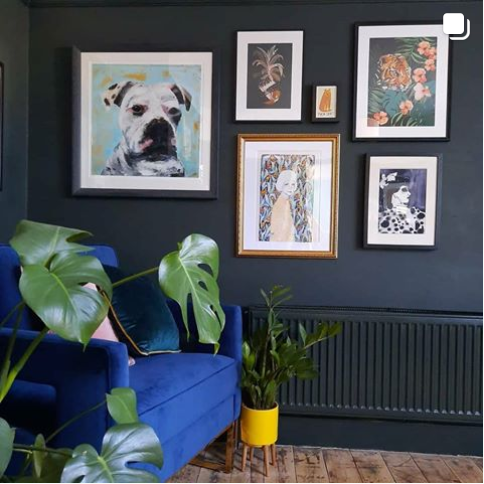
    However, for the majority of folks who are living with the bog standard ugly radiator, then the simplist solution is to paint them the same colour as the walls.

    Then, instead of detracting from our décor, they blend in and becomes less obvious as the eye travels around the room. We usually don’t want these kinds of radiators to stand out, and if we leave them white, against a coloured wall, that’s exactly what they’re going to do.
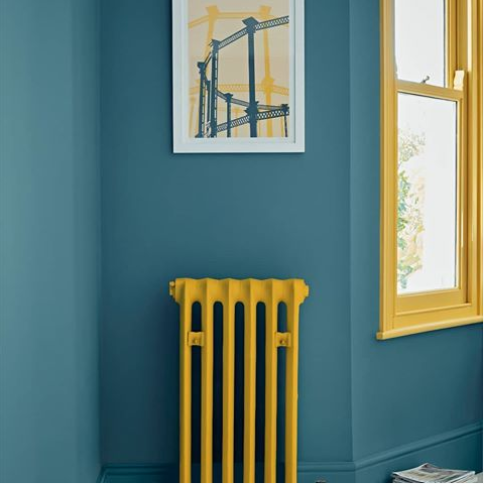
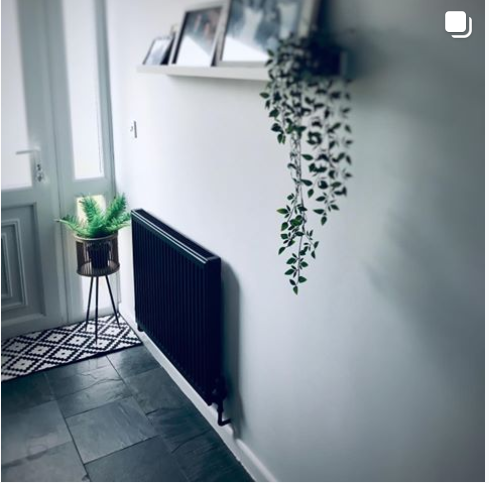
    That said, you could go the opposite route entirely. To be really playful and dramatic, you could paint the common (ugly) radiator in a contrasting colour, transforming it into a feature. Suddenly, it’s no longer an ugly obtrusion into the overall scheme, but an interesting element that adds to the overall effect.

    But coming back to the original point, unless it’s a feature radiator or the wall is white, then the radiator must be intentionally painted to work with the décor. Even if it is currently hiding behind a sofa….should you decide to switch up the layout, your ugly radiator may become exposed.

    We’ll look at layout in a subsequent post, as well as some other topics. For now, following are the other posts on colour that I’ve referred to. I hope you find them helpful:

    Key Colour Effects to Consider Before Hitting the DIY Stores.

    True & False Monochrome, and Other Colour Schemes.

  • Key Colour Effects to Consider before Hitting the DIY Stores.

    Key Colour Effects to Consider before Hitting the DIY Stores.

    colour consideration Taelynn Christophe Unsplash
    Photo by Taelynn Christopher on Unsplash

    Unsurprisingly, lockdown has stimulated our appetites for home improvement. And this is a good thing for our mental and emotional wellbeing, as our home environment has a huge role to play in that.

    Colour in particular has a significant impact on our moods and on our rooms. For that reason, we need to choose our colour palettes carefully and not be overly influenced by what’s trending on Instagram.

    When selecting colours for each space in our home, we need to consider the function of that space. Who is using it, for what purpose(s) and at what time(s) of the day? And we also need to consider what direction the space is facing.

    The Visual Effects of Colour in our Interior Spaces

    So most people probably know that light colours reflect light and dark colours absorb them. Hence, to make a room feel lighter and brighter, paint it a pale colour. And paint it a dark colour to make it feel cosier.

    There is another element that is lesser well know: light coloured walls tend to visually recede from us and darker ones appear to move towards us. So a whiter wall will feel farther away from us than a darker one.

    And when we can’t physically change the size of a space we use various tricks to play with how the space is perceived. The most impactful of these is colour, and the conventional application of this wisdom tends to be along these lines:

    • If the room is small paint it white, or at least a pale colour.
    • If the room is cavernously large, play with darker shades to visually shrink the space and make it feel less cavernous.

    These days designers are becoming increasingly fond of bucking this convention however, when it comes to small rooms. Particularly if the small room isn’t south-facing and so is only bright for a small portion of the day, if at all. It’s increasingly popular now to “embrace the darkness” and instead of trying to make a small dark room feel lighter and larger, to work with its natural leanings and opt for making it feel invitingly cosy instead.

    It’s an option! If your room is south-facing though and you’re craving a feeling of lightness and spaciousness, then do work with white or pale colours.

    And if you’re looking for a light effect, choose finishes with higher sheen as they will also help to bounce the light around the room. (And add mirror and glass to increase light reflection.) If you’re going for the cosy option, opt for more matt and less sheen.

    The Effect of Compass Direction on Colour

    The direction a room is facing is an important consideration in choosing colour, because the direction will influence the quality of light. And the light will affect how the colour appears on the walls.

    Here in the northern hemisphere the brightest and warmest light comes from the south. A south-facing room will be bright for most of the day. A north-facing room will almost always be relatively dull—even if you paint it white.

    Warm colour is what you will experience in a south-facing room, an east-facing room in the morning or a west-facing room in the evening. Cool colour is found in north-facing rooms, east-facing in the evenings and west-facing in the mornings.

    And the warmth (or lack of it) will affect the colours on the walls.

    Colours themselves sit on “warm” and “cool” ends of the colour spectrum. Greens, blues and purples that sit closer to blue than red (eg violet) are cooler. They can be very calming to the psyche, but when used in cooler light they can feel a little clinical and not that inviting—at least when you’re using the pure colour or a lighter tint of it. When you start to move towards darker shades however, then these colours can start to add more cosiness.

    Reds, yellows, oranges, purples that sit closer to red than blue, and greens that sit close to yellow are all warmer colours. They will all evoke a more vibrant feeling than cooler colours. However, in strong saturations they will be intense and are probably best used in transitional spaces, such a hall or downstairs loo. They can work well in kitchens and dining rooms too if you want a stimulating atmosphere. In living rooms and bedrooms though, opt for paler tints rather than strong versions of the colour.

    Greens and blues will feel more clinical in cooler light and more relaxing in warmer light. So they can be great choices in living and bedrooms if the light is warm at the time that we use them—morning in the bedroom (to encourage us to get up and embrace the day) or evening in the living room (to enhance chillaxability). Naturally we also want our bedroom to feel relaxing and not clinical in the evening time, and this can be achieved by choosing warmer lightbulbs for reading and ambient lamps.

    Because of this interplay of light, it’s important to buy tester pots before you invest your time and money in the full paint job! Put swatches on every wall in the room, because the colour will look different on each wall. And check it at different times of day, because it can potentially look like a totally different colour between morning and evening. Give it a few days of examining a few options before you make the call. And choose the colour that gives the effect you want for the time of day you will be using the space.

    Colour Psychology

    In addition to the effect of light in a room, we also want to consider how we ourselves want to feel when spending time in it.

    As mentioned above, both green and blue can be very calming to the psyche. But you’re not limited to these choices for your relaxation quarters. Opting for paler tints of your favourite colour will also help you wind down.

    For concentration and focus, look at darker blues verging on navy.

    For a cheery effect look at oranges and yellows. Beware of red as it can be a tad too stimulating. In addition to stimulating passion, it can also stimulate tempers so it’s best kept to a minimum in our homes. If you love it and really want it, opt for a darker shade (like burgundy) in the dining room, or a paler tint (like pink) in the bedroom.

    Orange can be a good choice in the kitchen and dining room, stimulating appetite and conversation.

    And yellow can feel inviting and welcoming in the hallway, or put us in a positive frame of mind in a breakfast room. With both yellow and orange though, the effect can be a bit too stimulating depending on where you land on the colour spectrum. Better to go with a paler tint or a darker shade (like mustard) than a pure sunny yellow, which might give some people a headache if they spend too long in the space.

    You gotta love it!

    While holding the factors above in mind, the most crucial thing of all is that you love the colour. Don’t put navy in your home office because it helps concentration if the affect that colour has on you is to feel gloomy. Look for a shade of a colour that resonates better with you. Maybe a teal blue instead of navy. Or maybe you need the walls to be blank white spaces so you’re not distracted.

    The psychology guidelines reflect what is generally found to be true for most people. But we are each our own person and we might personally buck the trend. These are a good starting point, but remember to cross-reference them with your own preferences.

    If your home is going to make your heart sing, you need your colour palette to harmonise with that intention!

    So to recap, the main things to consider when choosing your paint colours have nothing to do with the current Colour of the Year. Get clear on:

    1. What kind of visual impact you want to create in the room
    2. What kind of impact you want the room to have on your mood
    3. What effect the light will have on colour choices at the time of day the room will be in use

    And then play with the appropriate tints and shades of the colours you love.

    Happy paint selecting. And if you’d like some help choosing your color palette https://blog.hildacarroll.com/colour-consultation/I offer consultations to support you with this.

    Thank you for reading. You might also enjoy:

    Making Small Spaces Feel Bigger while Breaking the Colour Rules.

    The Life-Changing Magic of Treating your Home as a Temple, Especially if it Feels like a Jail Right Now.